
By Andy Edser
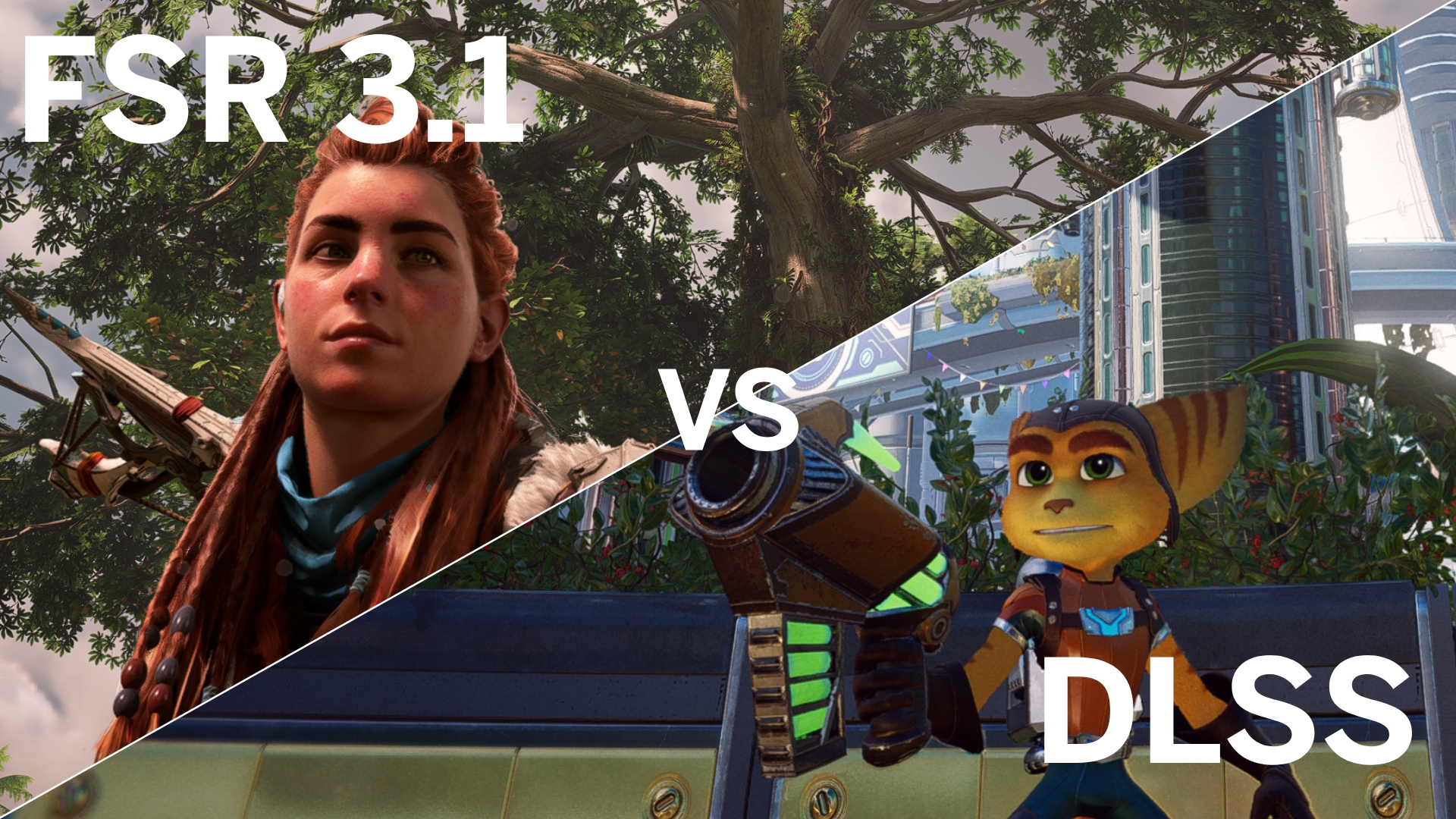
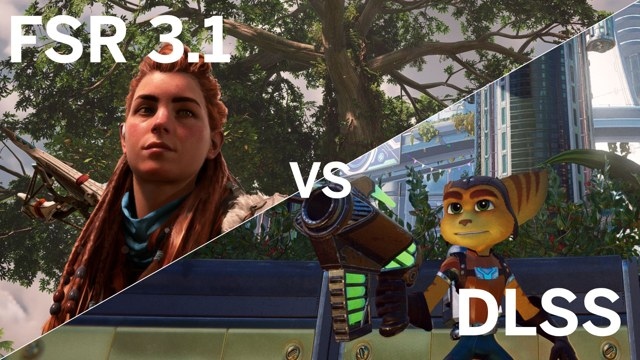
DLSS has generally led AMD's FSR and Intel's XeSS in image-quality comparisons, retaining more detail with less shimmer, flicker and grain—and often delivering better performance. FSR 3.1 promises to narrow that gap through improved temporal stability, reduced ghosting and better overall reconstruction.
Unlike DLSS, AMD's compute-based upscaler remains graphics-card agnostic. FSR 3 introduced Frame Generation, but its underlying upscaling was unchanged from FSR 2.2. The changes promised for 3.1 therefore warranted a fresh comparison.
For these tests, Edser used an RTX 4070 to examine image quality and performance in two games. Frame Generation was disabled throughout, keeping the comparison focused on the upscalers themselves.
Horizon Forbidden West: closer at Quality, weaker at Performance
Horizon Forbidden West offers an immediate stress test: its opening area combines flying insects, running water and flowing hair, all challenging material for an upscaler. Edser positioned Aloy on a log to capture the insects, then moved around the area to assess motion.
The comparison footage uses maximum settings at 1440p, with FSR 3.1 and DLSS 3.5 both set to Quality and motion blur disabled.
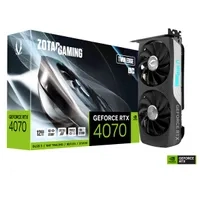
Zotac Gaming GeForce RTX 4070 Twin Edge OC: This small form factor–ready graphics card has 5888 CUDA Cores for gaming and 184 Tensor Cores for AI Processing, including upscaling. Active fan control and IceStorm 2.0 cooling support its compact design.
YouTube compression obscures some differences, so the highest playback quality gives the clearest view. Initially, both upscalers preserve the scene well. In particular, the trails previously associated with FSR around small flying insects appear substantially reduced.
Closer inspection still favors DLSS. As the camera turns through the flowers at around 0:41, both versions blur the side of Aloy's face, but FSR 3.1 leaves a longer trail during slow, steady movement.
FSR's characteristic grainy or “fizzy” outline around moving objects is also improved rather than eliminated. At 1.02, when Aloy jumps in front of the water, her silhouette shows distortion and grain against the fast-moving stream. The effect is considerably less visible with DLSS.
Screenshots at the same 1440p Quality settings help separate these differences from video compression. Edser captured comparable moments from Aloy's idle head-turning animation, although matching them precisely was difficult. Both results look good, but DLSS leaves less blur beside her head and appears slightly better at reconstructing some static background detail.
At this resolution and preset, FSR 3.1 is broadly competitive. Its remaining weaknesses are most apparent in fine detail, grain and motion rather than the overall scene.
Switching both upscalers to 1080p Performance makes the gap much larger. Aloy's head is moving in both comparison frames, despite imperfect alignment between the shots, and DLSS preserves it far more successfully. FSR's reconstruction breaks down much more visibly at these settings.
Horizon Forbidden West performance
FSR 3.1 fares better in frame-rate comparisons. Across repeated runs, it generally averaged a couple of frames ahead of DLSS 3.5, although the differences remained within the margin of error.
That makes AMD's solution comparable, and potentially slightly faster, in this game—but with the image-quality compromises described above. Neither AMD nor Nvidia Frame Generation was enabled for these measurements.
Ratchet & Clank: Rift Apart: a clearer DLSS advantage
Ratchet & Clank: Rift Apart pairs FSR 3.1 with the newer DLSS 3.7. Its furry characters, densely decorated environments and ray tracing provide a different set of reconstruction challenges. Edser tested at maximum settings, including ray tracing, at 1440p.
FSR again delivers a generally good image at these settings, but motion exposes grain. Turning Ratchet toward the camera reveals pixelation around his furry ears against the scenery. DLSS handles those edges better, especially with detailed backgrounds behind them, producing a smoother and more pleasing result when switching between the two.
Ghosting is less troublesome than in earlier FSR versions. Despite floating ticker tape, fast effects and flying particles, Edser noticed relatively little trailing. Nevertheless, DLSS produces cleaner frames with fewer artifacts overall.
Both upscalers can provide a good experience at 1440p if the player is not scrutinizing small details. DLSS still has a visible advantage in busy scenes, whether the character is moving or standing still.
1080p Performance exposes FSR's weaknesses
The side-by-side screenshots at 1080p Performance show a much sharper divide. FSR loses considerable clarity around Ratchet's eyes and introduces significantly more artifacts along his arms. Behind his ear, DLSS retains fine shrubbery detail that looks muddy, pixelated and almost cel-shaded with FSR—as though a different set of textures were being used.
Fast movement makes the problems more distracting. Edser recorded an additional video because FSR's grain and fizzing at this resolution were severe enough to remain obvious through video compression.
Edser found FSR's 1080p Performance presentation unpleasant enough that he would rather not play the game in that state. DLSS is not especially attractive at these settings either, but its smoother image is substantially less distracting.
Ratchet & Clank performance
At 1440p Quality, the two upscalers delivered identical average performance. At 1440p Balanced and 1080p Performance, however, DLSS moved comfortably ahead while also producing the better-looking image.
The verdict: improvement without parity
FSR 3.1 handles motion better than its predecessors and delivers respectable image quality at 1440p Quality. It has not, however, caught DLSS. On an Nvidia card, these results offer little reason to choose FSR beyond the possibility of a small frame-rate advantage in certain games.
AMD and Intel users should still benefit when games adopt the updated version. Based on his experience with successive FSR releases, Edser could see real improvements, particularly in reduced ghosting. Yet the compute-based, hardware-agnostic approach continues to trail Nvidia's refined AI-based reconstruction in these comparisons.
The update does not eliminate the grain, fizzing and other distinctive FSR artifacts that Edser had encountered in earlier versions. The different approaches may help explain that gap, but the tested results remain in Nvidia's favor.
As an AMD-card user, Edser welcomed the prospect that games using FSR 3.1 would look better than with previous versions. His reservation was that DLSS on an Nvidia card would still make those games look cleaner—and, in some cases, run significantly faster. AMD has progressed, but DLSS wins this comparison.

Andy built his first gaming PC at 12, in the days of IDE cables. Twenty-six years later, he writes about and reviews PC gaming hardware, including graphics cards, CPUs, keyboards, mice and gaming headsets.

