By Ben Wilson
Cyberpunk 2077's most demanding visuals remain challenging even for high-end hardware. Wilson's tests show how DLSS 4 Multi-Frame Generation makes those settings more practical on an RTX 5080, while an RTX 5090 can generally deliver 60 FPS at 1440p without MFG.
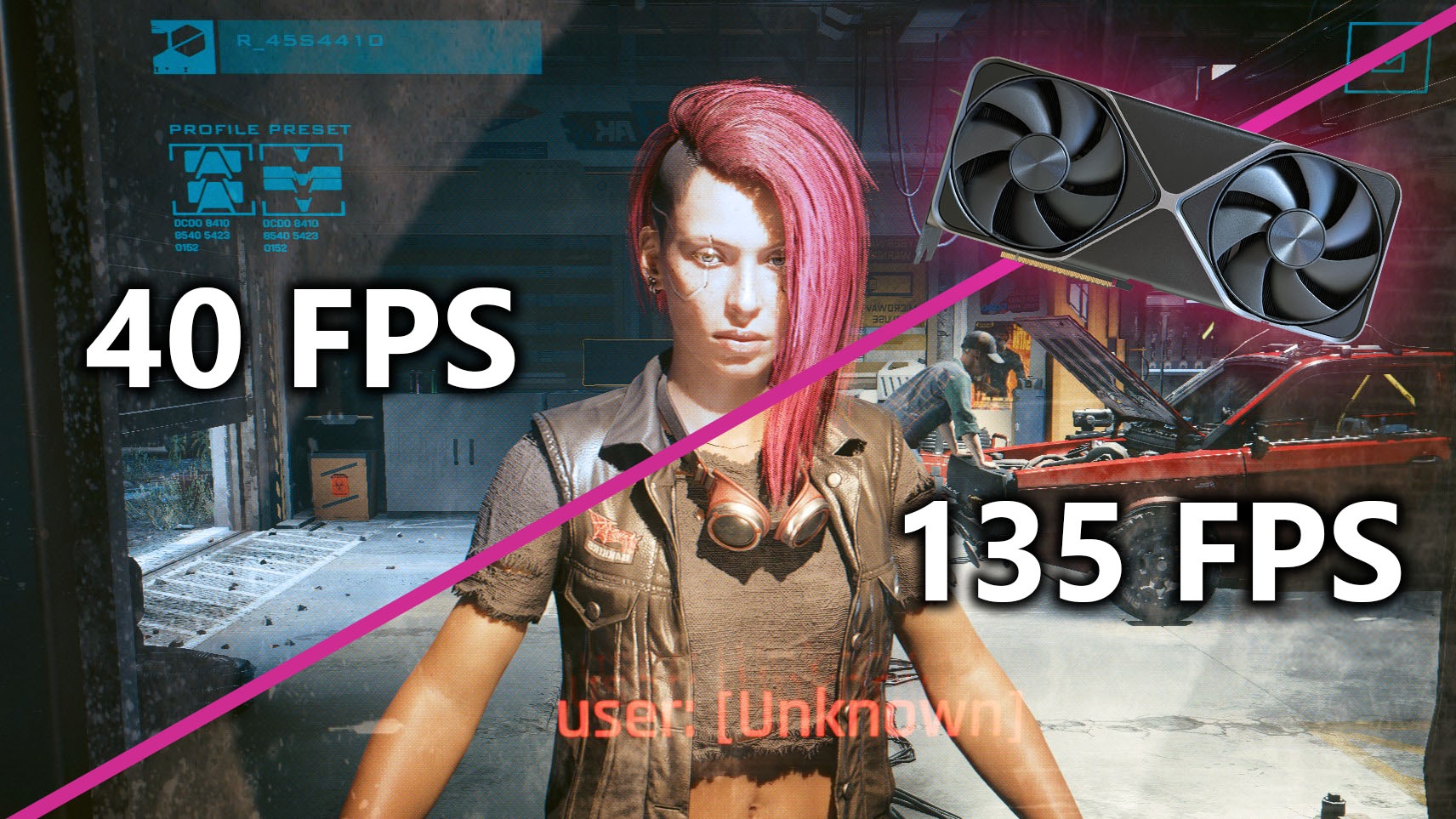
After Wilson reviewed NVIDIA's RTX 5080, Cyberpunk 2077 received DLSS 4. Alongside a new "Transformer" model for image upscaling, it brings Multi-Frame Generation (MFG), allowing RTX 50 Series GPUs, including the RTX 5090, to increase frame rates by 2x, 3x, or 4x.
Generated intermediate frames can introduce input delay, as Wilson observed with versions of AMD Fluid Motion Frames (AFMF). NVIDIA Reflex—or Radeon Anti-Lag on AMD hardware—should counteract control latency. His results with DLSS 4 MFG were particularly impressive, though not free of limitations.
RTX 5080: Maximum settings with DLSS 4 MFG
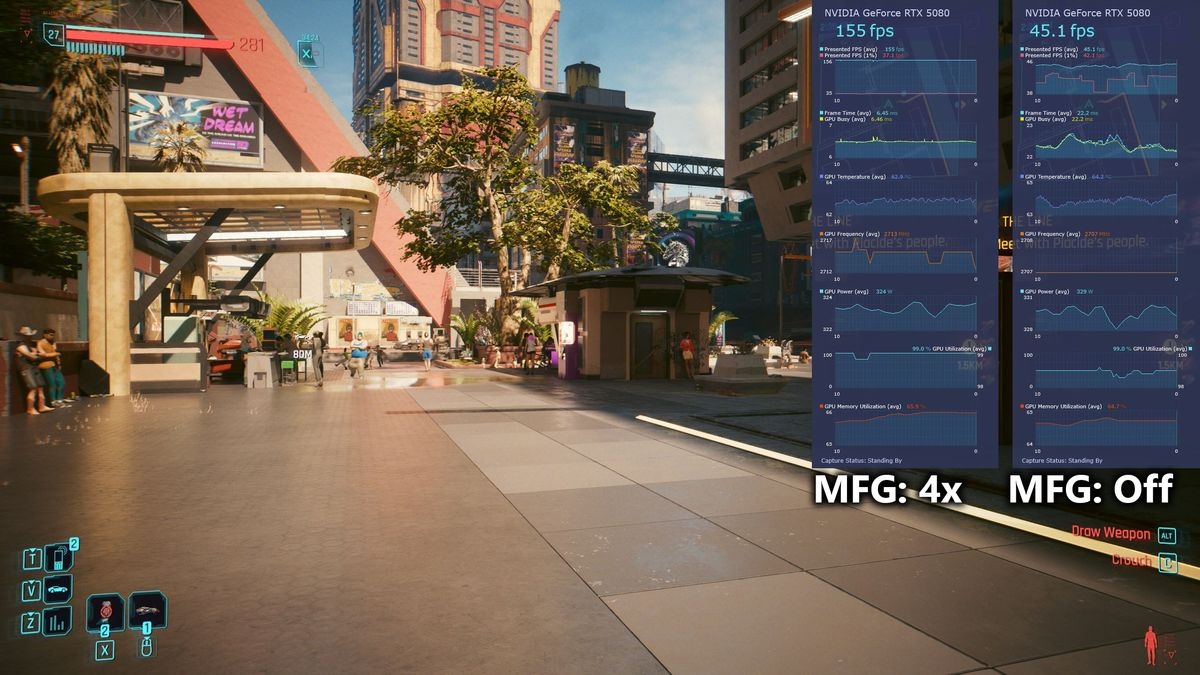
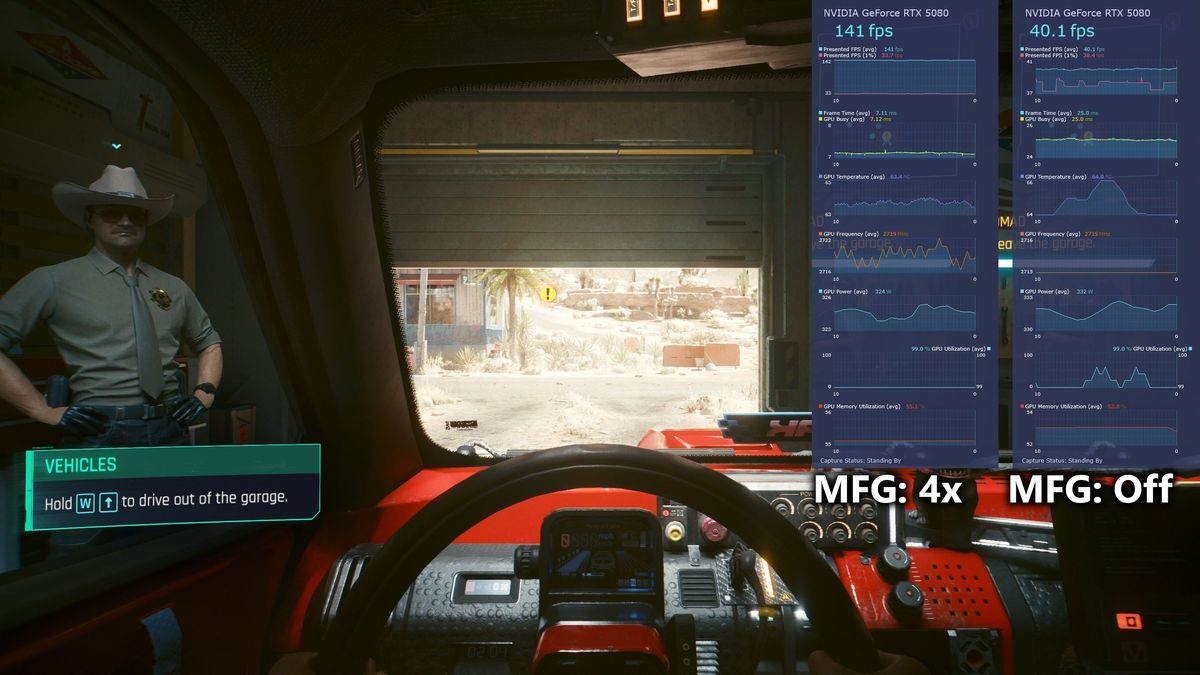
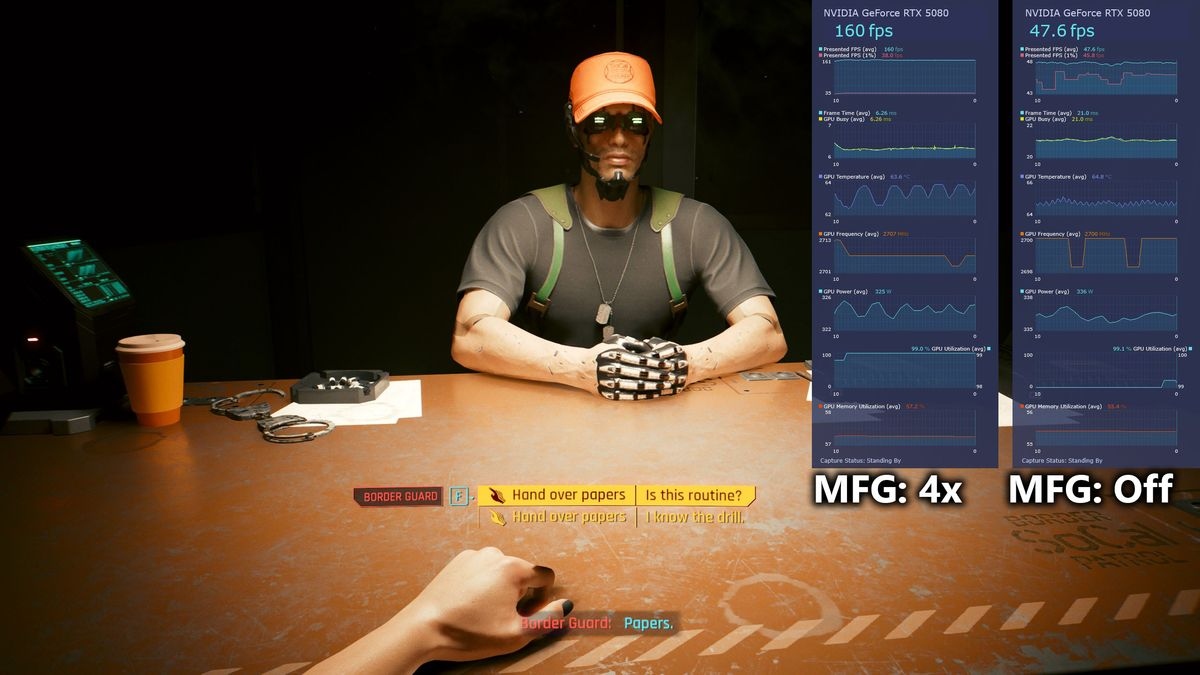
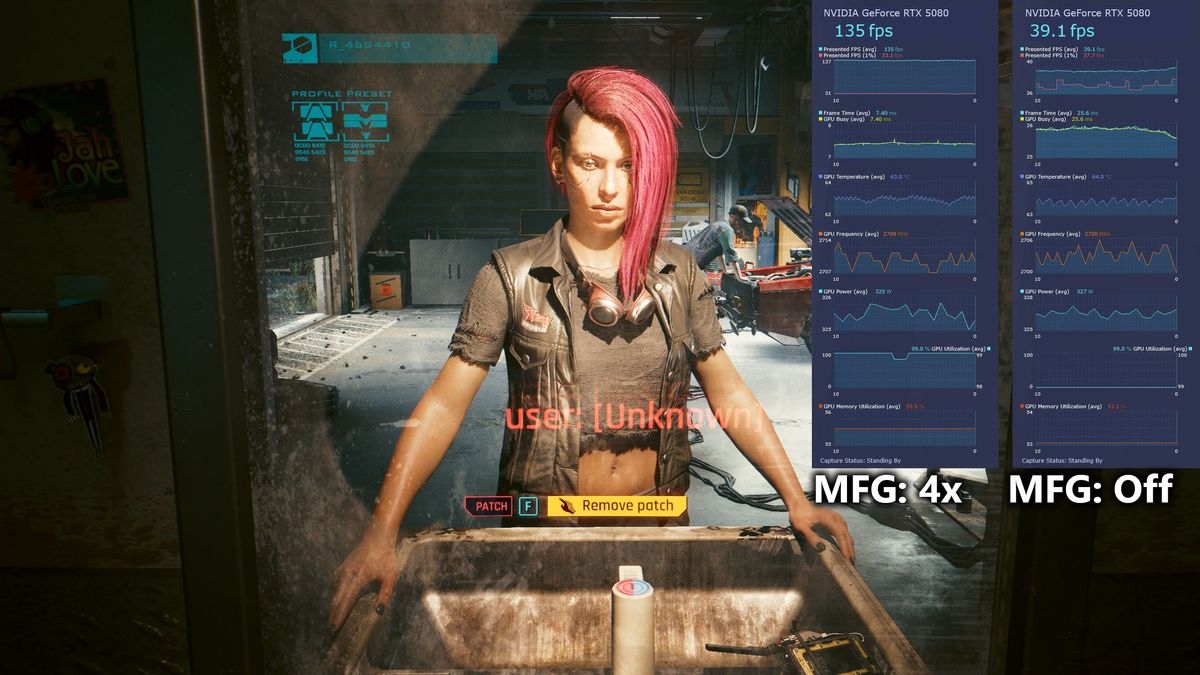
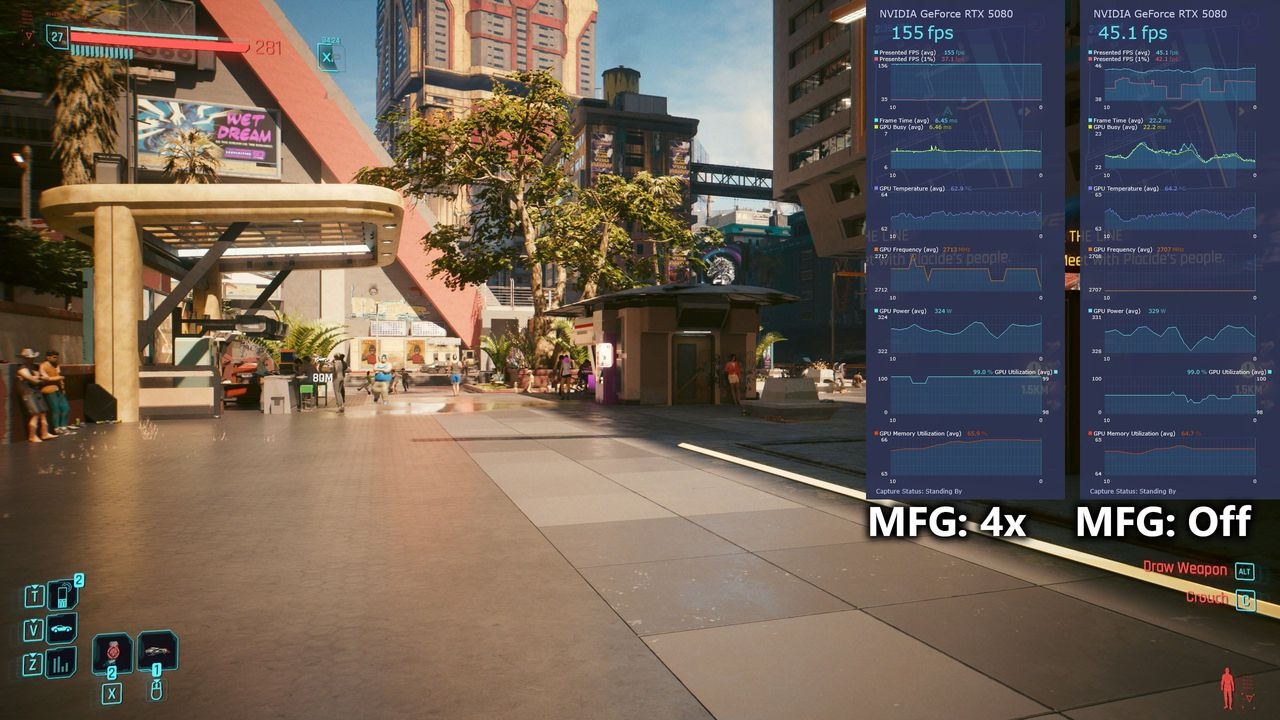
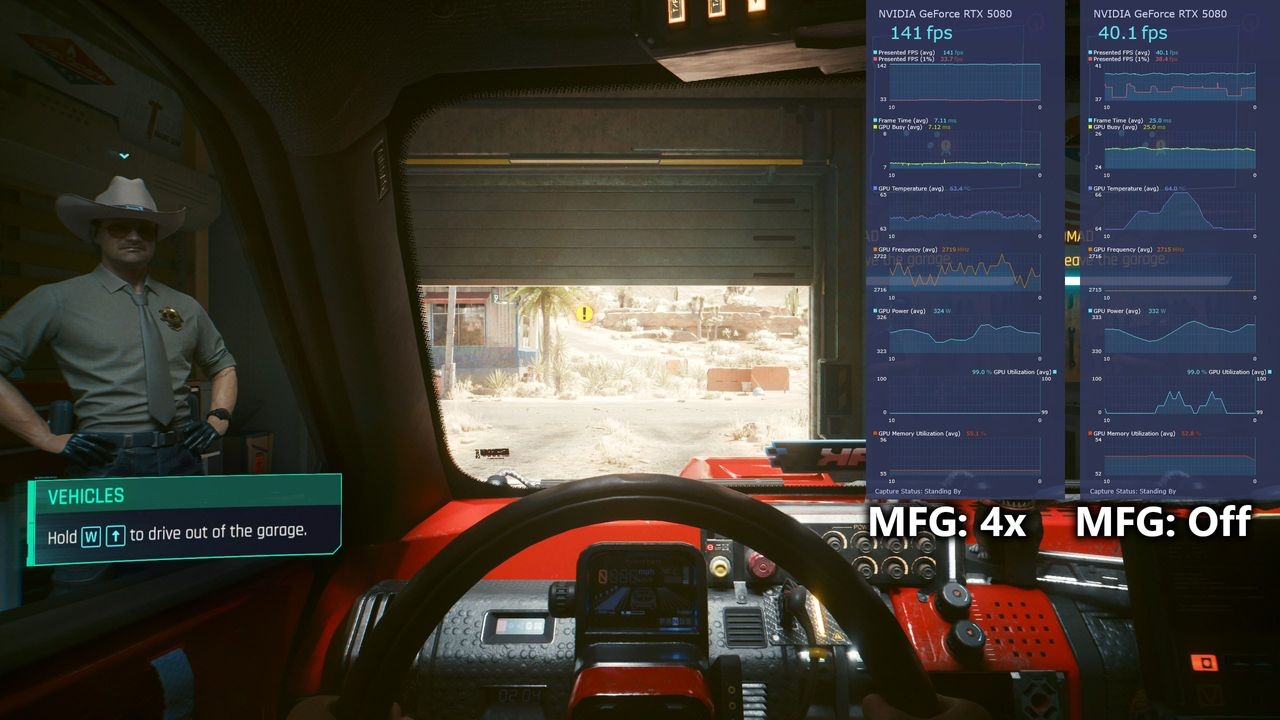
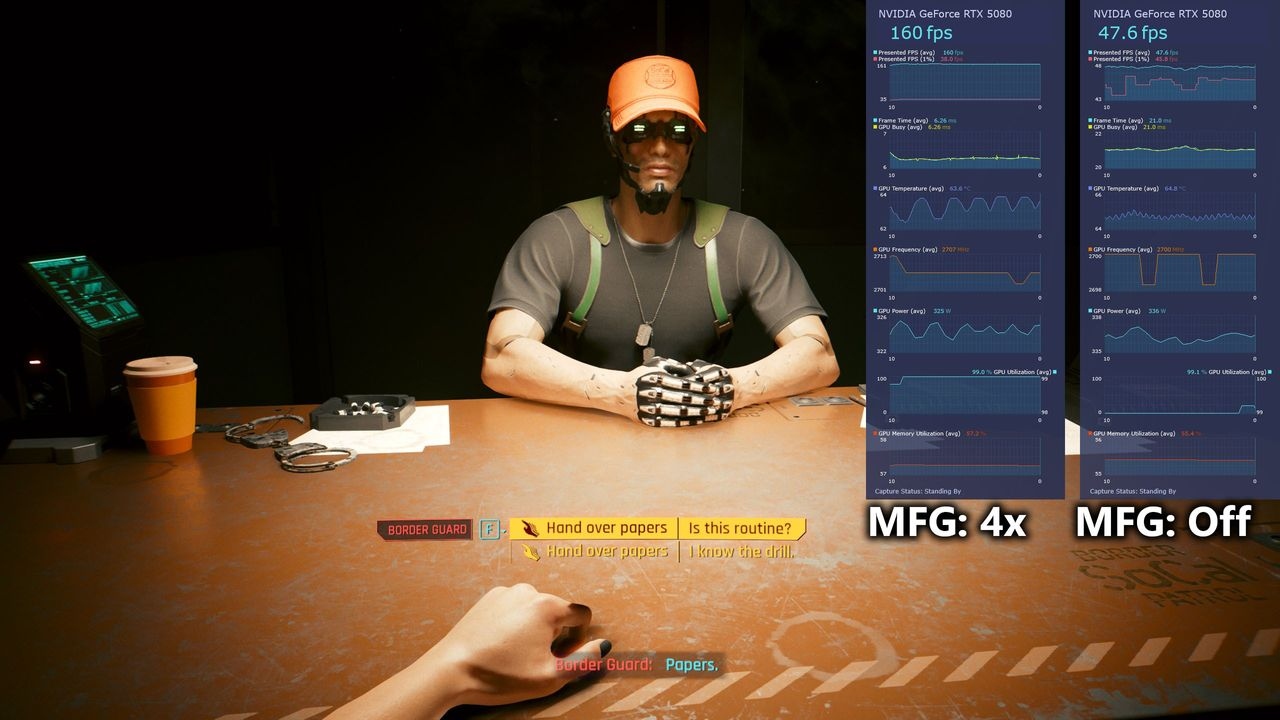
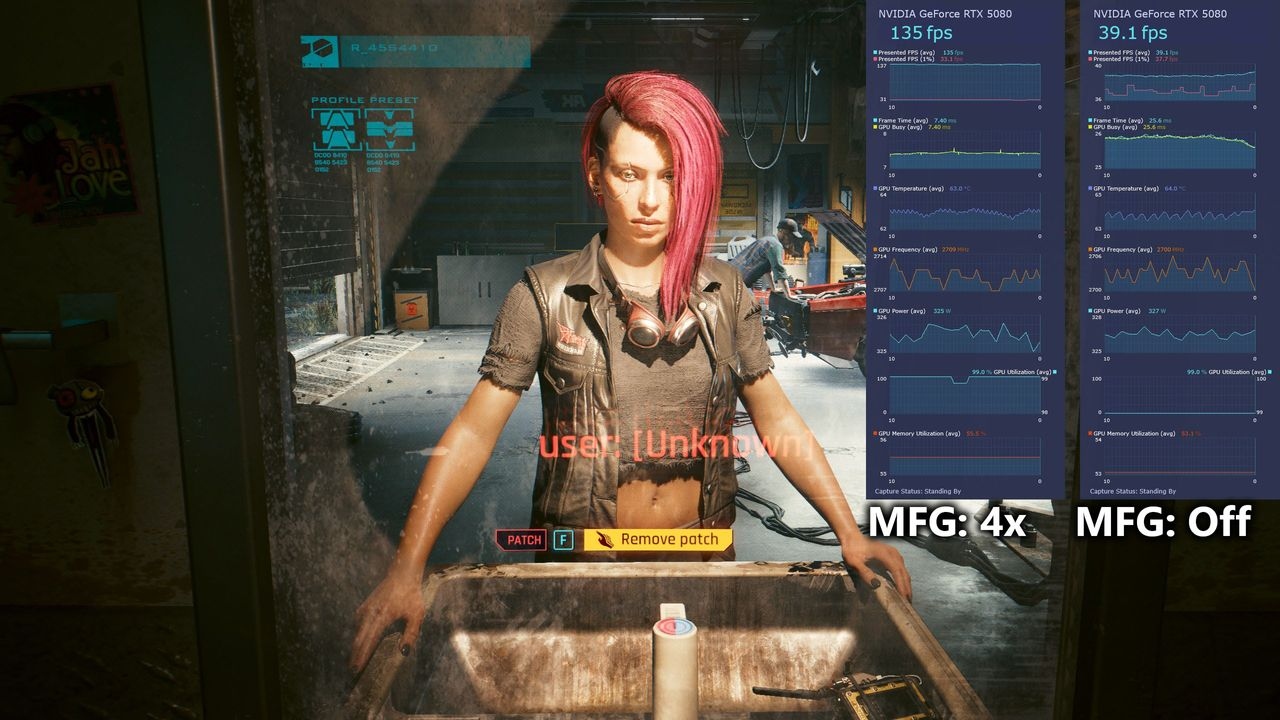
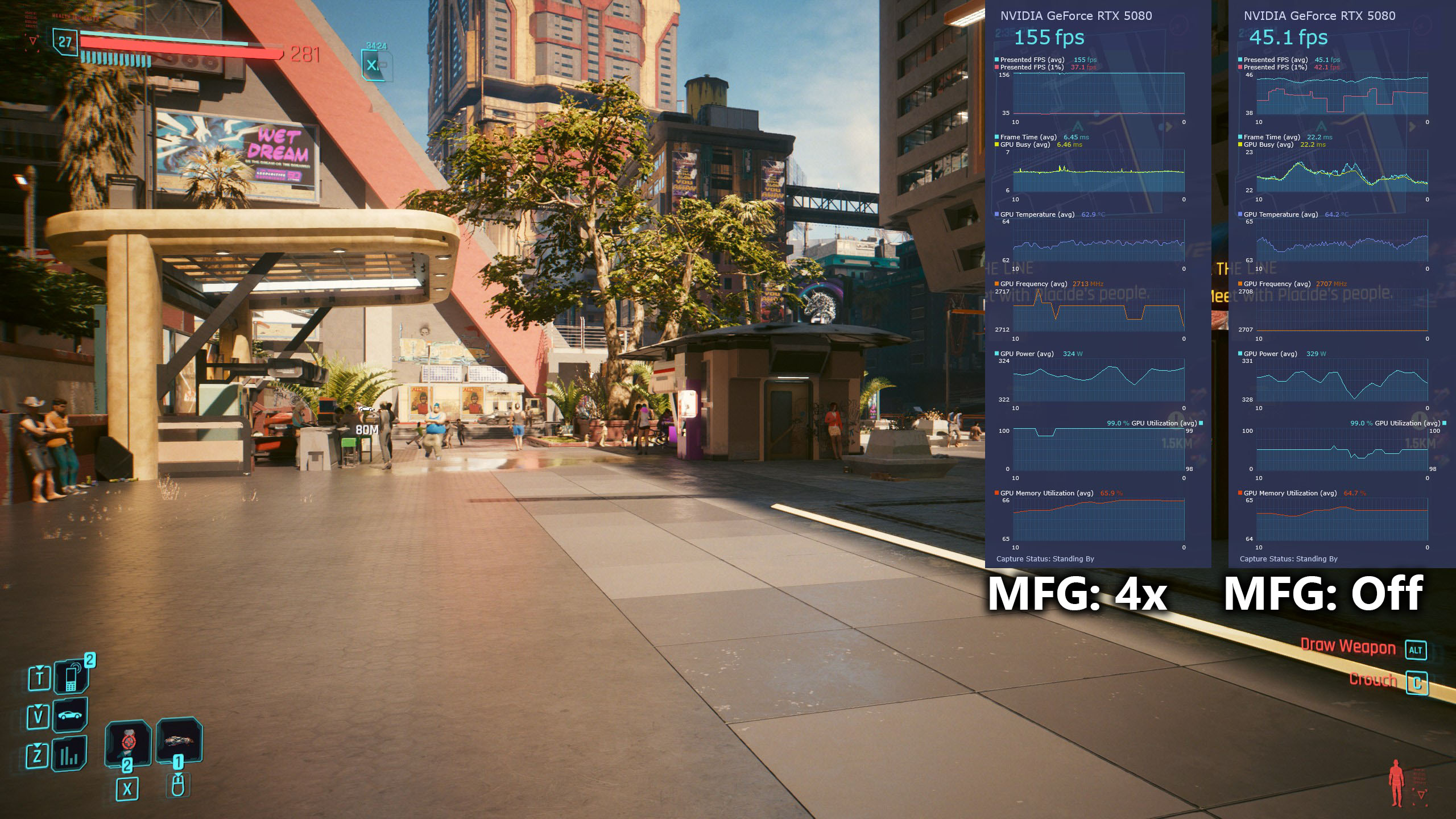
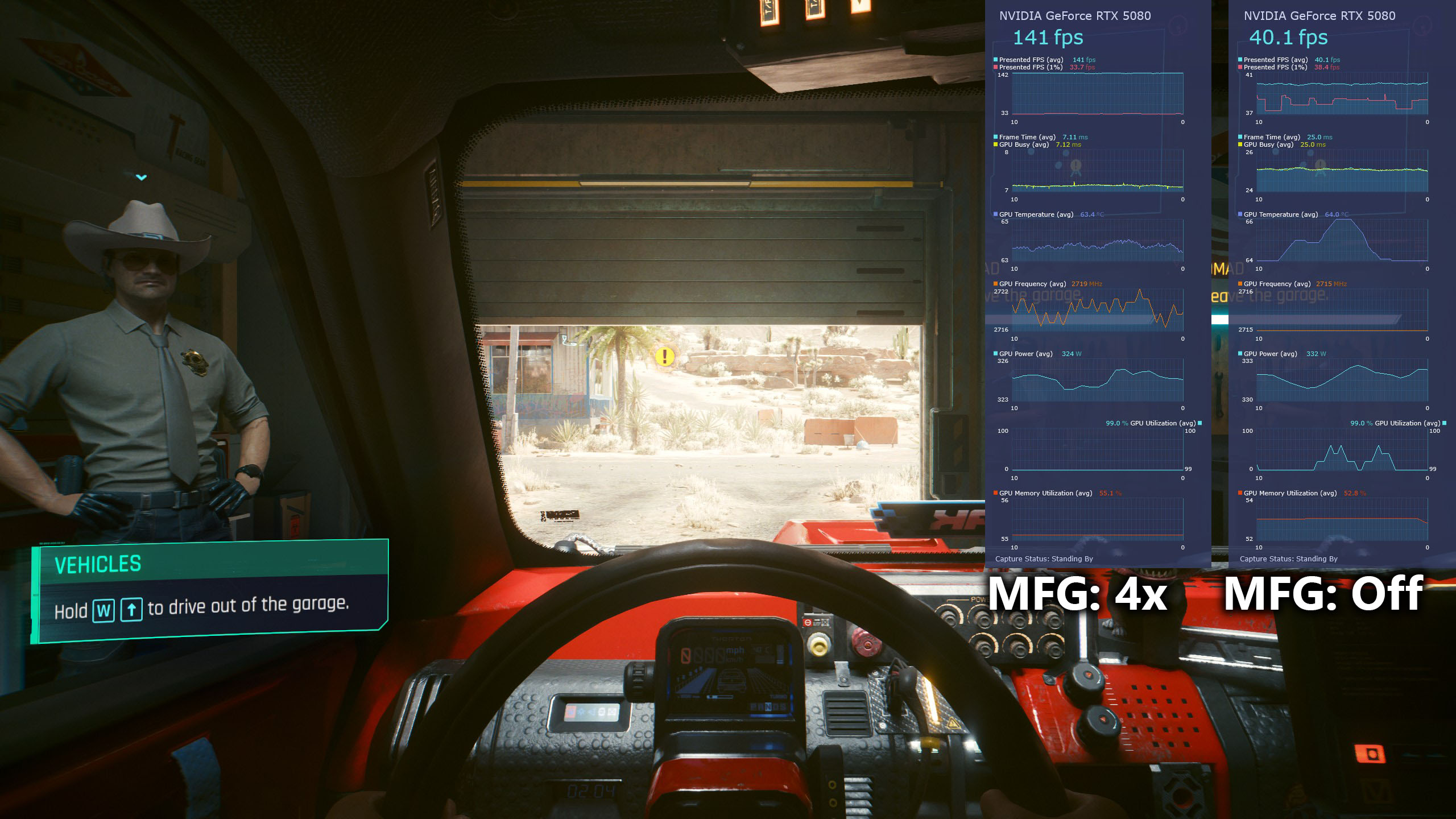
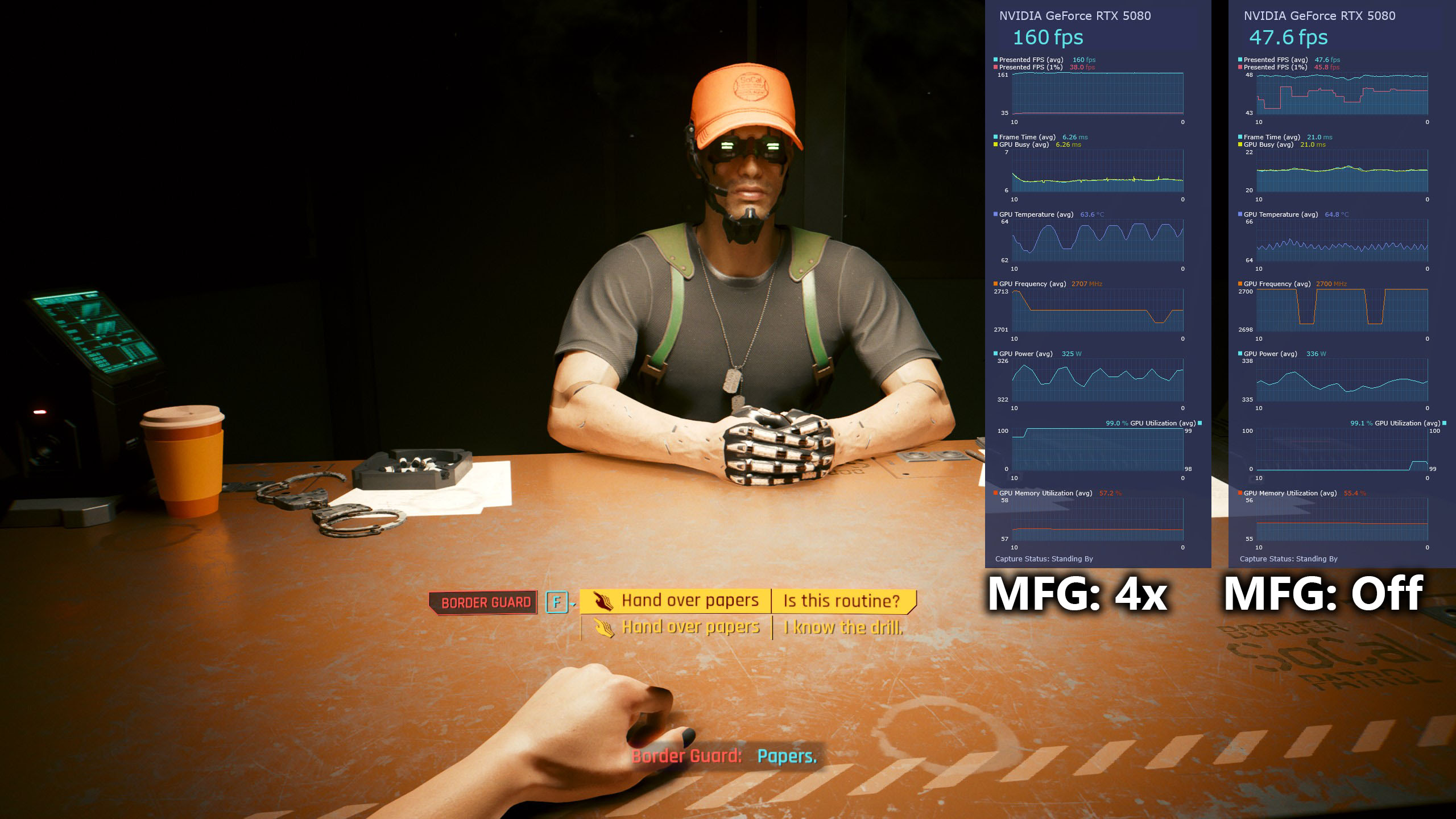
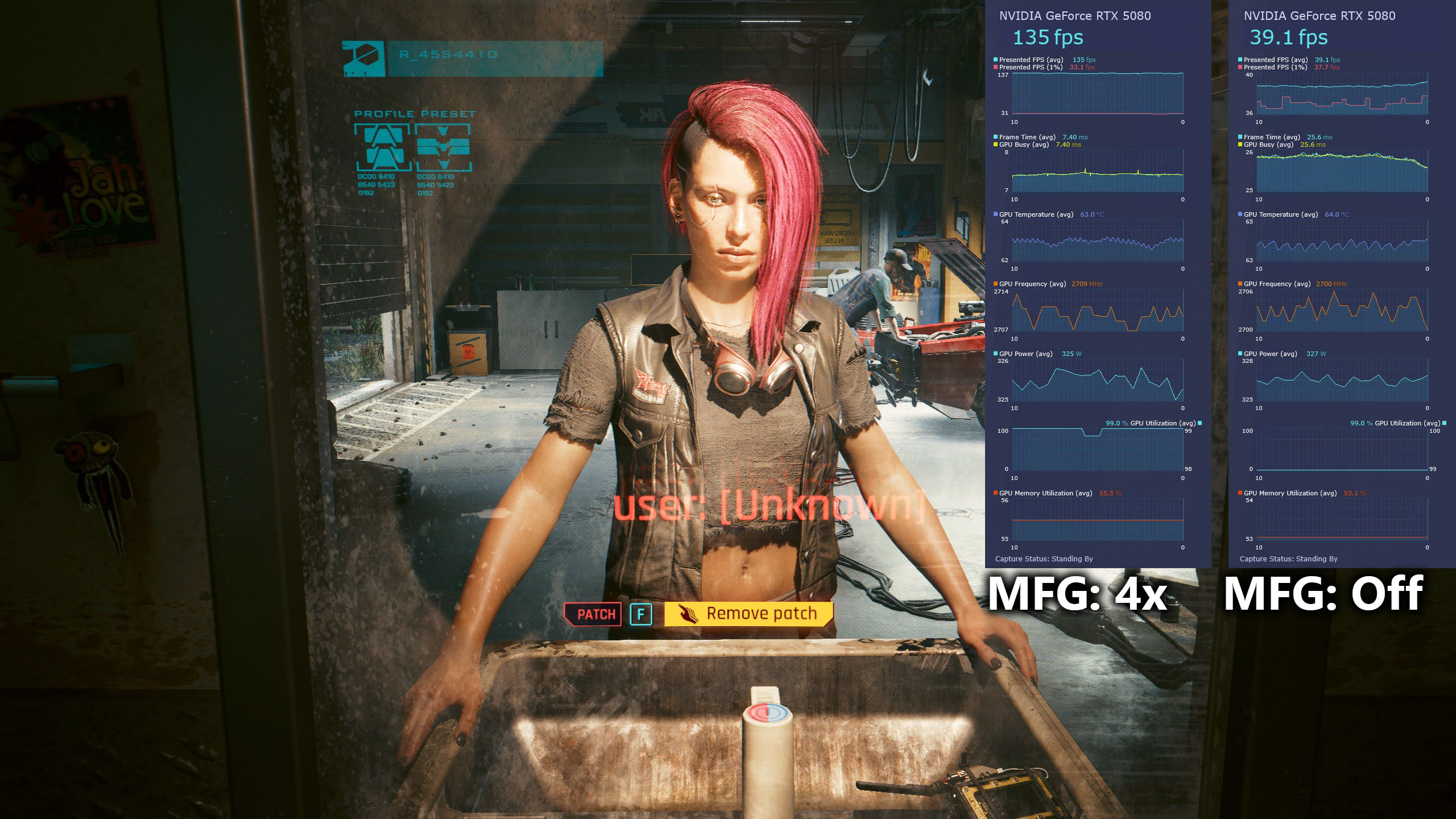
With the latest Cyberpunk 2077 update, enabling 4x Multi-Frame Generation produced roughly a 244% performance increase, with negligible temperature differences. The RTX 5080 testing recorded temperatures of 63°C at 1440p.
Wilson used the 'Ray Tracing: Overdrive' preset with path tracing enabled throughout testing, pushing real-time visuals to their maximum. At his chosen resolution of 1440p (2560 x 1440), the RTX 5080 could not sustain 60 FPS without MFG; performance typically hovered around 40 FPS.
DLSS 4 upscaling can extend the image to 4K (3840 x 2160), with improved clarity that reduces smearing and tearing on distant objects. Those native-resolution results nevertheless show how demanding the game's highest settings remain.
Setting DLSS 4 MFG to 4x raised the average above 135 FPS, but movement through the world occasionally revealed subtle visual hitches. Reducing a few graphics settings to establish a smooth 60 FPS baseline appeared to eliminate them entirely, reinforcing the longstanding advice to start with a solid baseline before using generated frames.
Wilson also noted that many 'Epic' or 'Ultra' options offer barely perceptible improvements, or none that are apparent. Running everything at maximum can be enjoyable, but those settings are not always visibly worthwhile.
RTX 5090: Around 60 FPS at 1440p without MFG
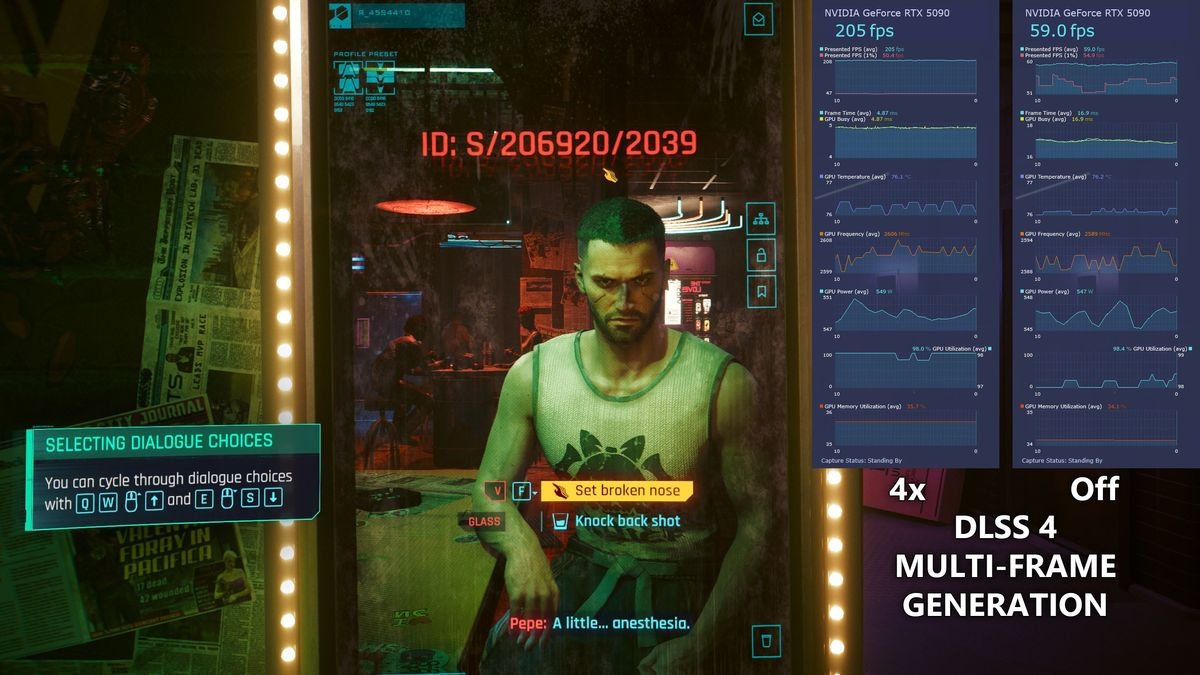
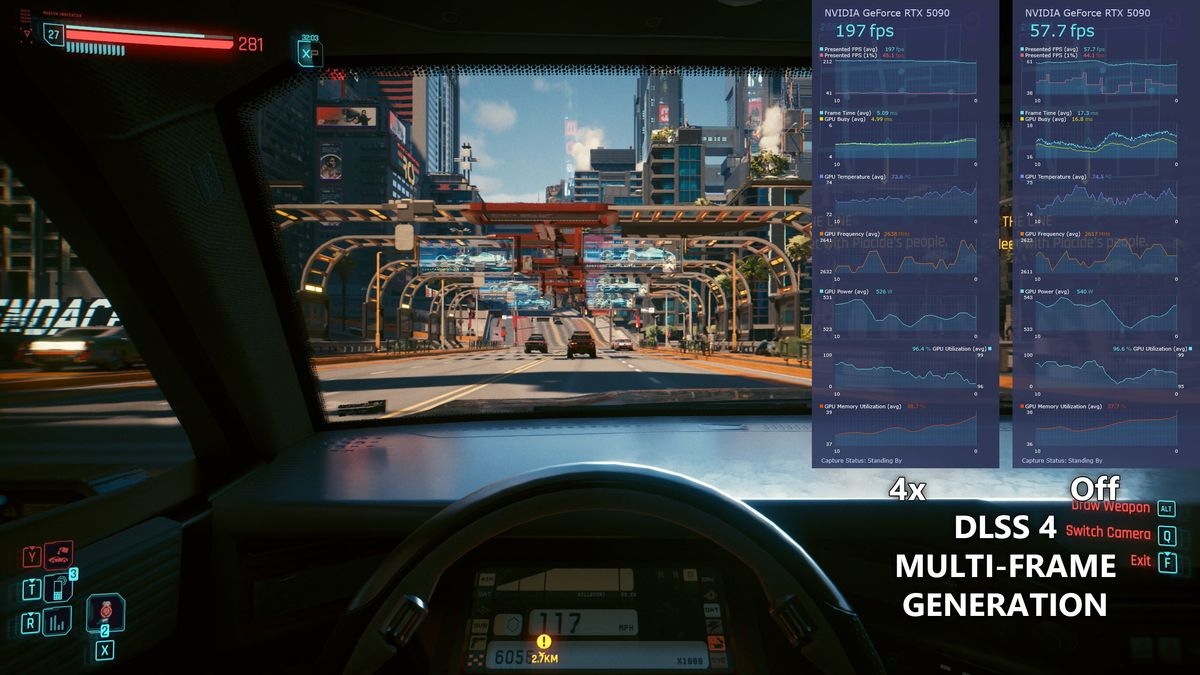
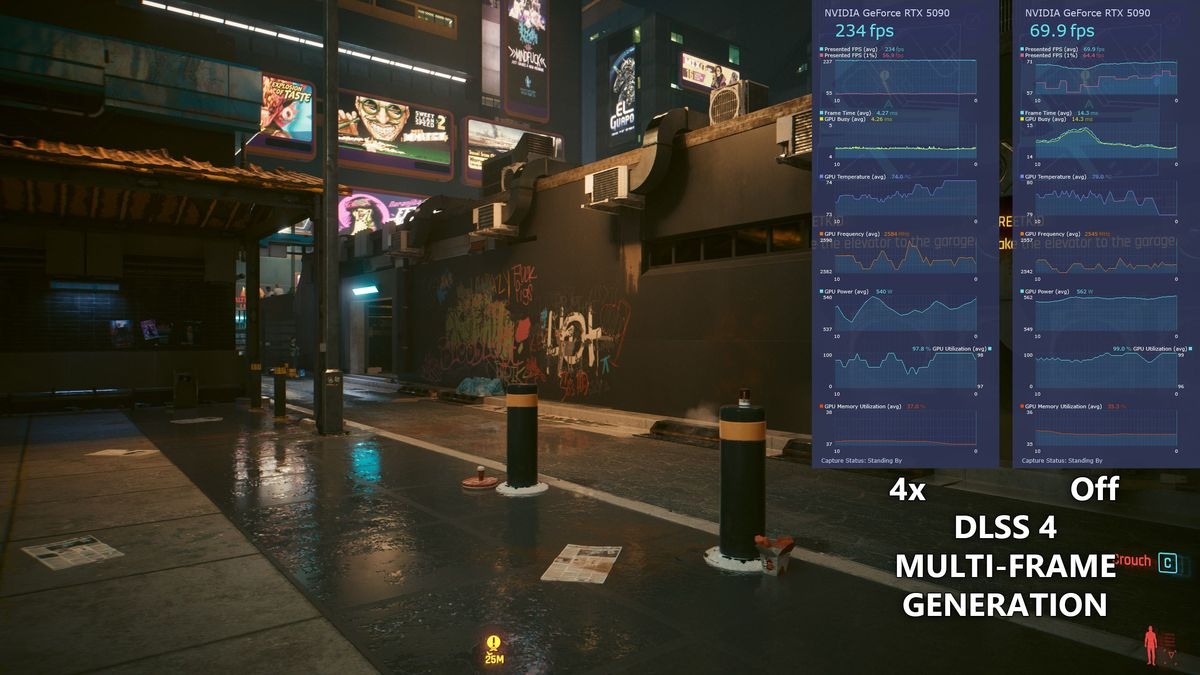
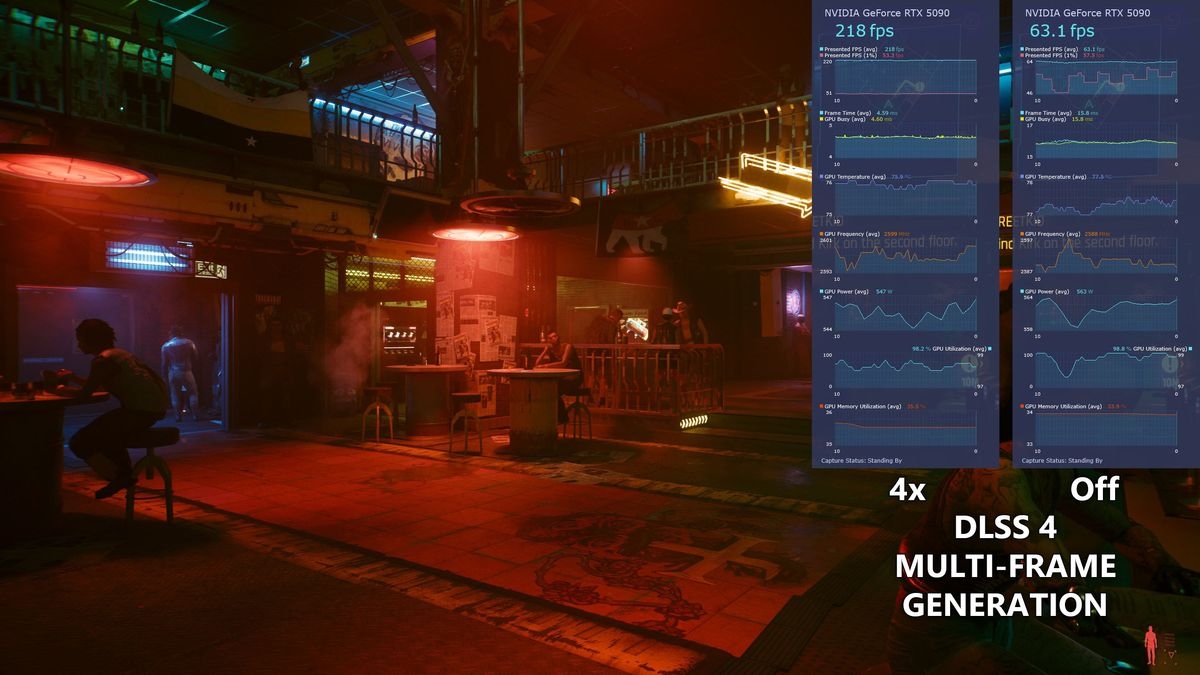
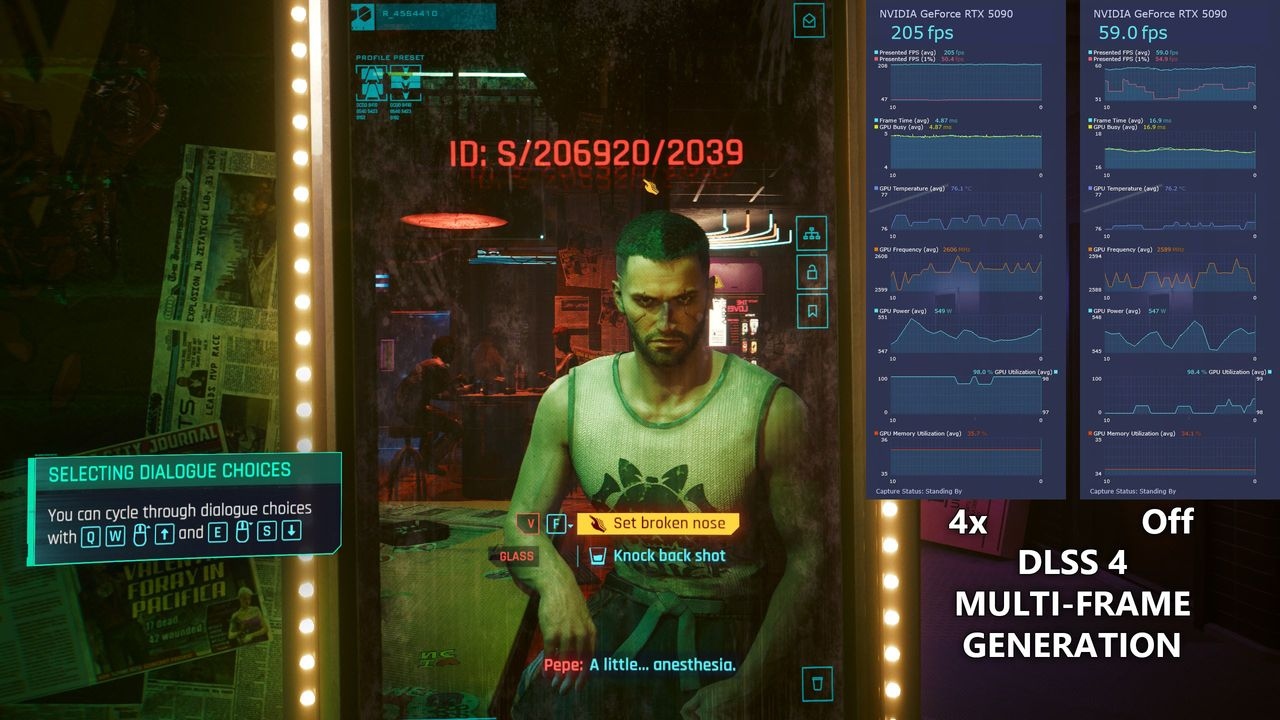
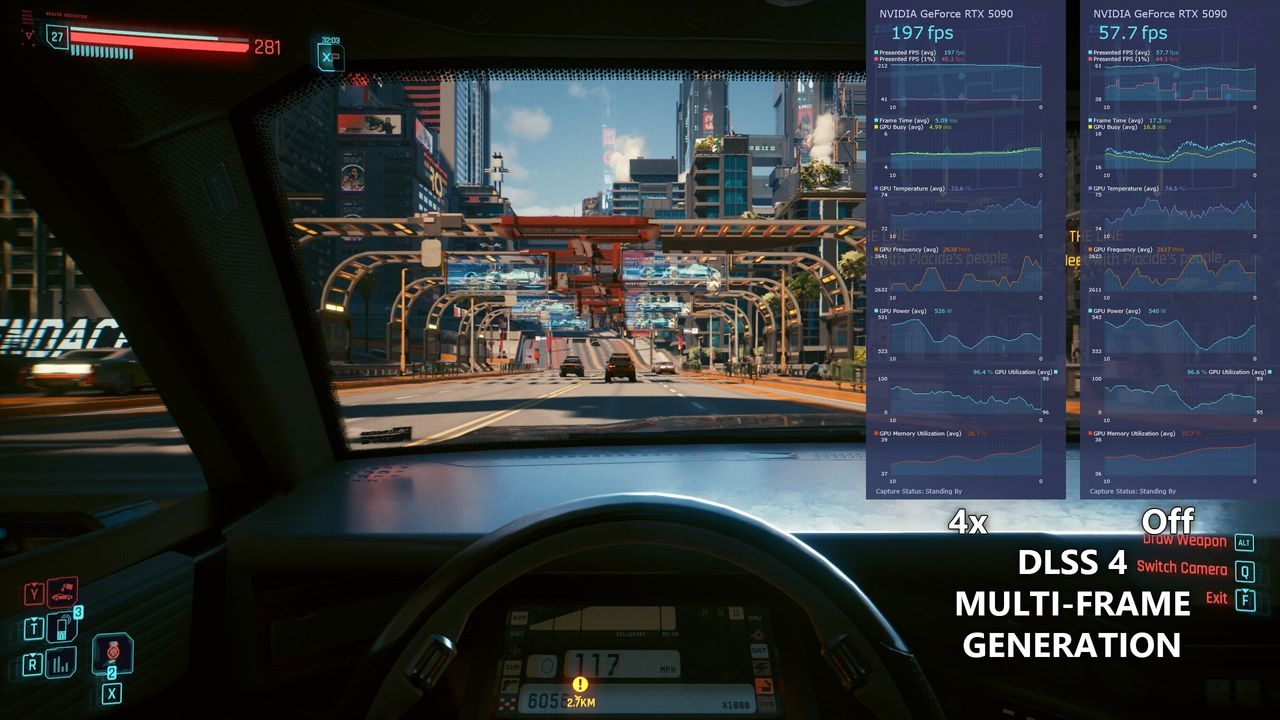
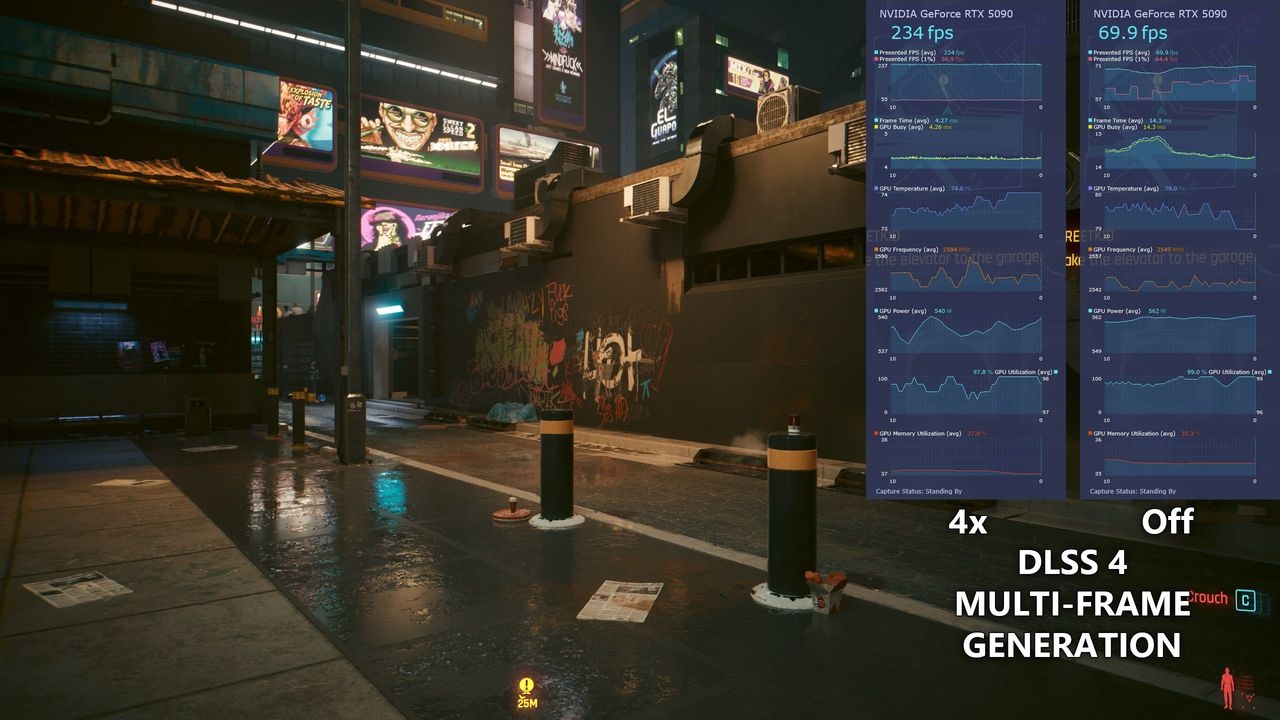
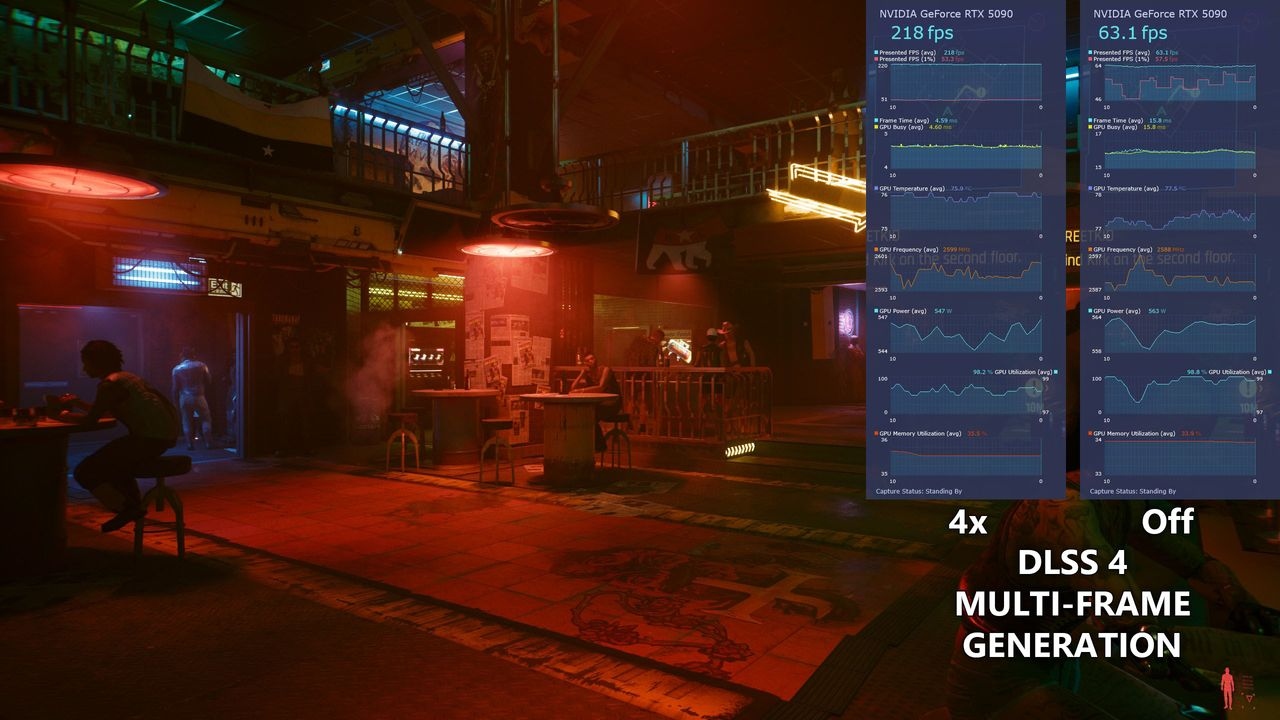
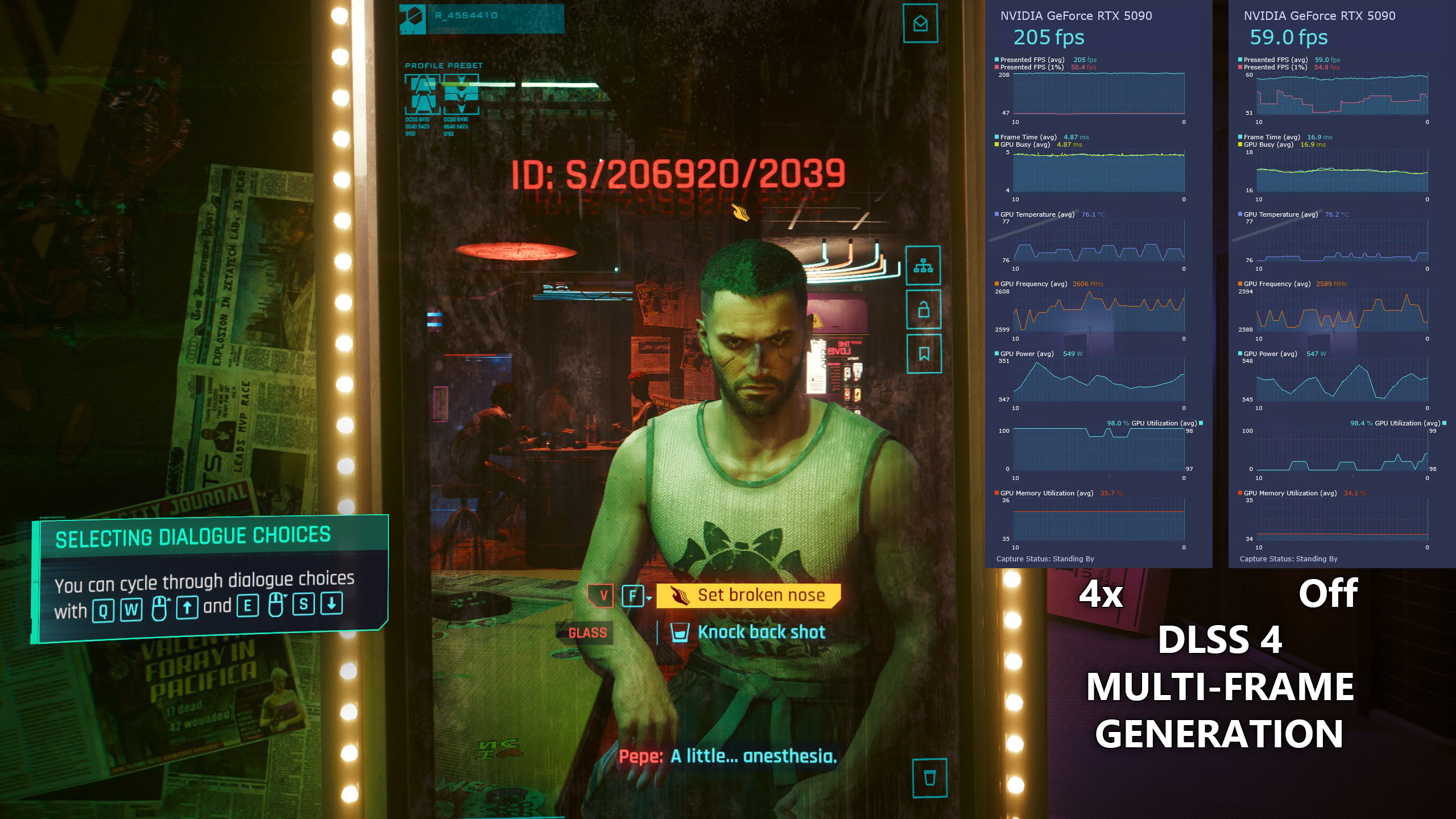
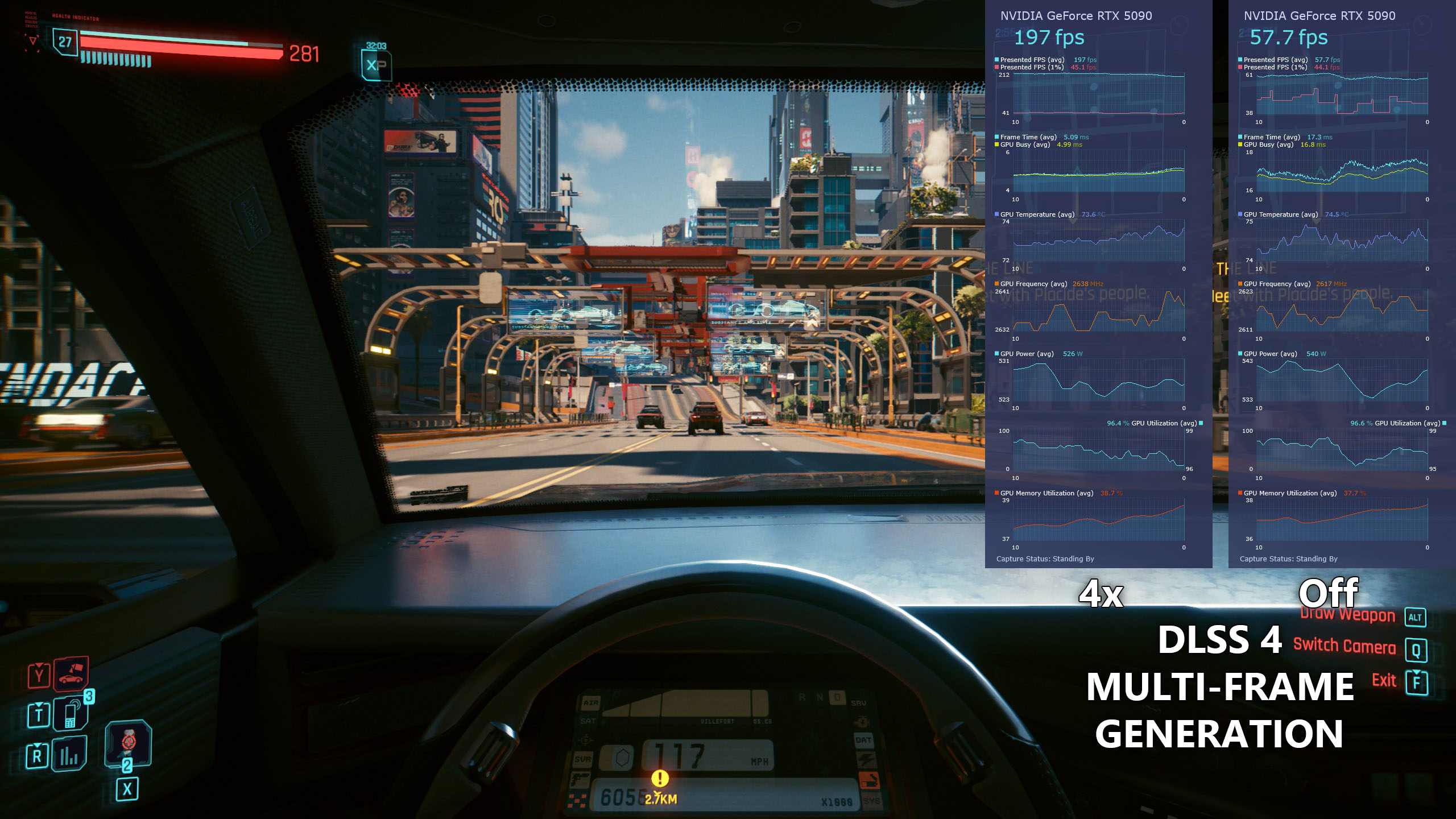
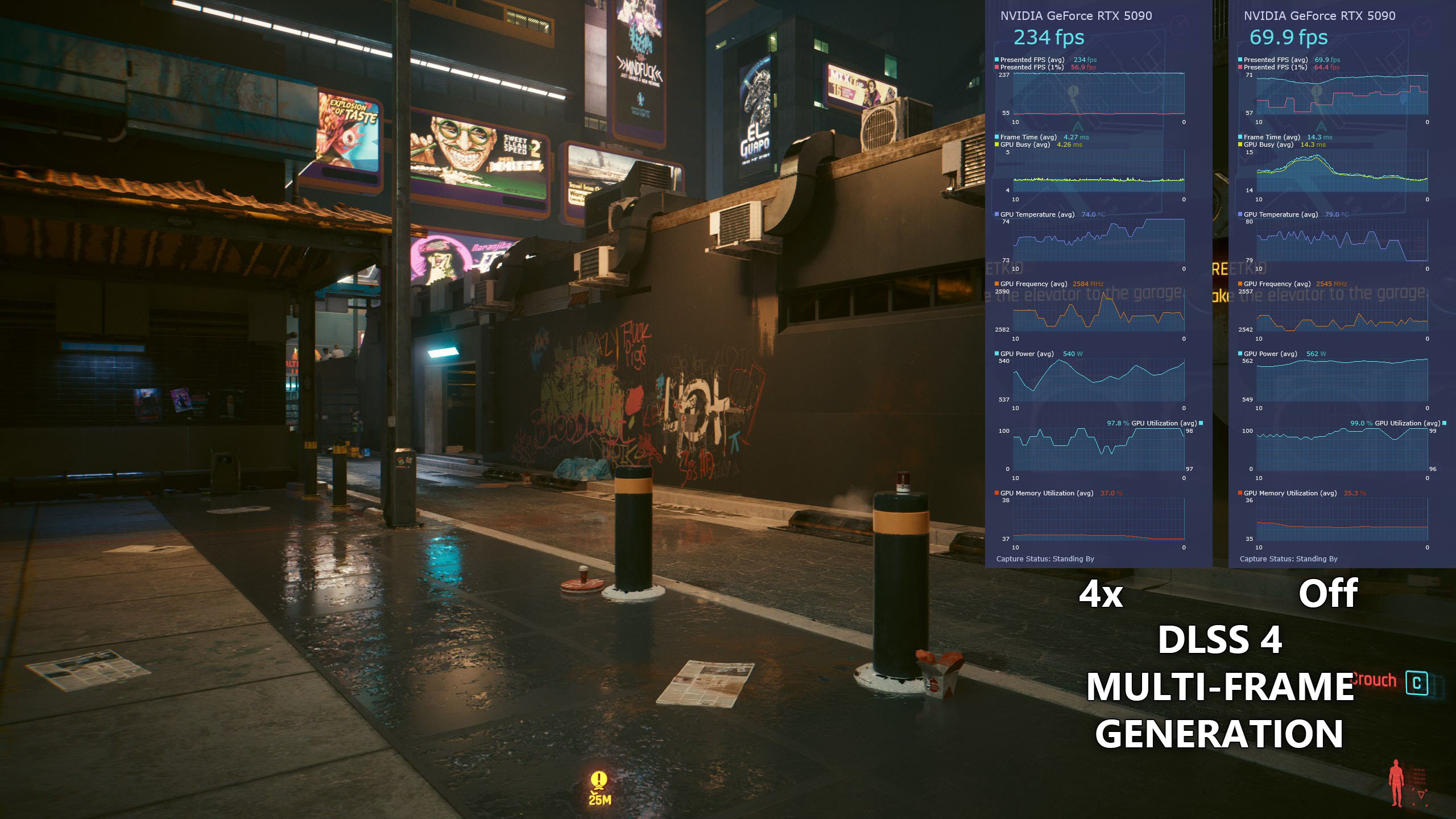
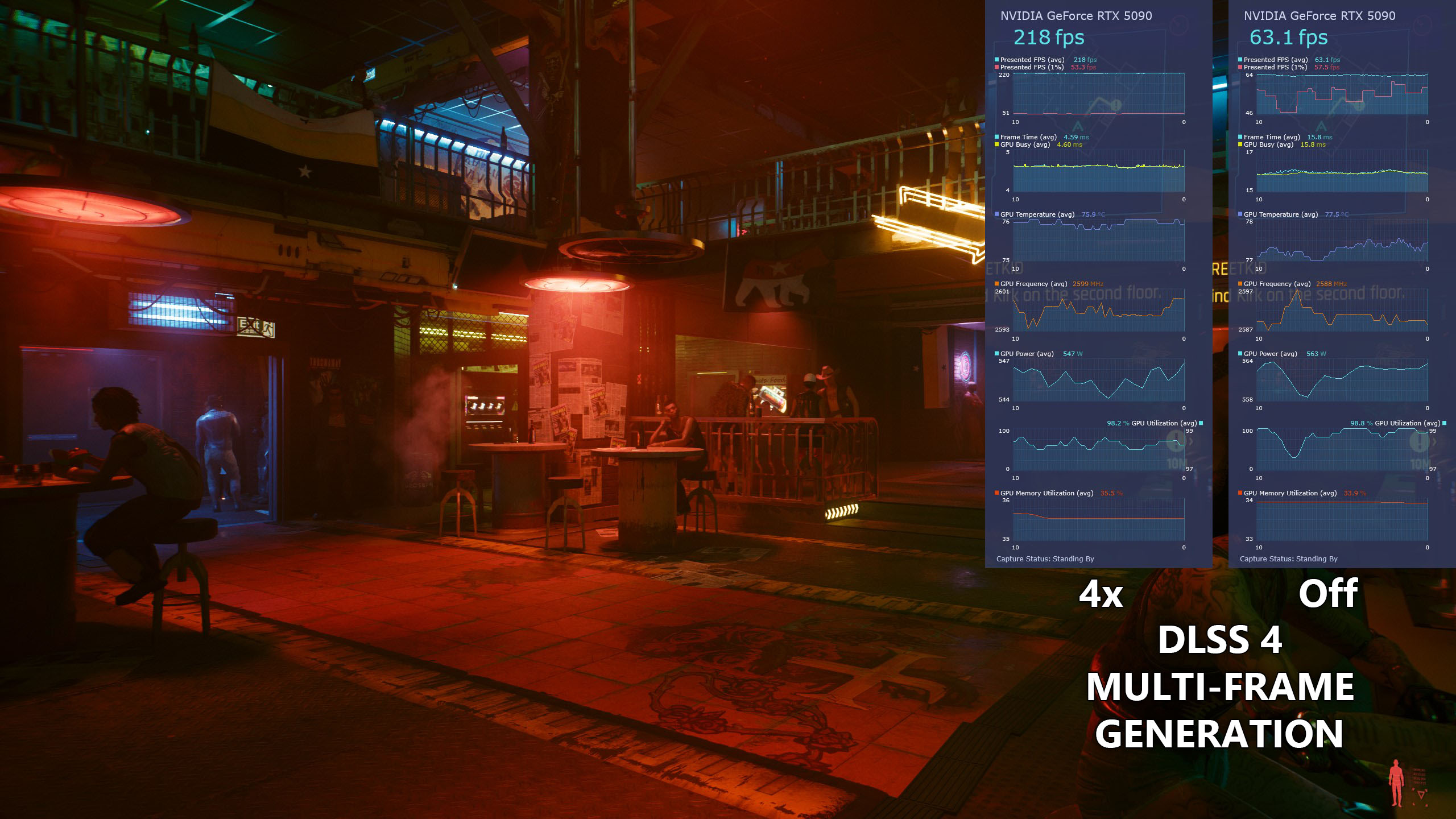
The $1,999 RTX 5090 largely meets the expectation of 60 FPS at maximum settings, provided the resolution is 1440p. A few scenes fall slightly below that baseline, but performance is otherwise generally smooth without MFG. Achieving real-time 4K at this level of visual fidelity still means relying on DLSS 4 upscaling for a UHD display.
For Wilson, the expense makes DLSS 4 and Multi-Frame Generation the more appealing route to a playable frame rate. Although moving from his RTX 3060 12GB would be a dramatic upgrade, he feels the novelty of these costly visual showcases fades quickly. The results also illustrate what owners of an RTX 2080 / Ti / SUPER could expect from a current-generation upgrade—assuming they can find an RTX 5080 in stock.

Ben Wilson is a Senior Editor at Windows Central covering PC gaming hardware, software, and related technology. His experience includes extensive custom desktop building, hands-on work with Windows PC and Xbox components and accessories, and expertise in laptops and advanced processors.