
Super Resolution renders an image at a lower resolution, then scales it to match the display. Combined with related technologies, it can improve clarity and frame rates through AI training or purpose-built algorithms.
NVIDIA, AMD and Intel each offer their own implementation. Microsoft's DirectSR serves a different purpose: simplifying how developers integrate those options.
Updated January 14, 2025: Cale Hunt added information on DLSS 4, FSR 4 and XeSS 2.
How NVIDIA DLSS works
Deep Learning Super Sampling (DLSS) is NVIDIA's proprietary AI-based technology for improving frame rates and image quality. It introduced a new approach to supersampling, an established antialiasing technique, and can be particularly effective alongside ray tracing.
The original DLSS used NVIDIA's supercomputer and neural network to examine supersampled “perfect frames” from compatible games. Processing initially focused on antialiasing at a lower resolution, with subsequent passes adding pixels to sharpen the higher-resolution result without a major performance penalty.
That first version required NVIDIA to train on each game individually. Announced in March 2020, DLSS 2.0 replaced that process with a shared network usable across games, although each title still needed to implement support.
DLSS 3 arrived in September 2022 for RTX 40-series GPUs, combining Super Resolution, NVIDIA Reflex and Frame Generation. Its Super Resolution AI reconstructs three-quarters of an initial frame, while Frame Generation completes the second frame. Reflex synchronizes the CPU and GPU to reduce latency and make inputs feel more responsive, particularly in competitive games.
DLSS 3.5 added AI-assisted Ray Reconstruction to further improve ray tracing.
DLSS 4 and hardware support
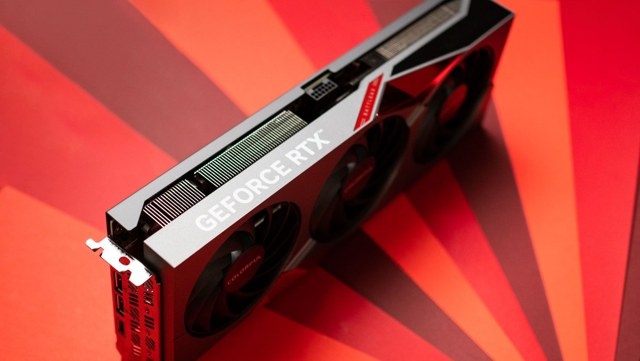
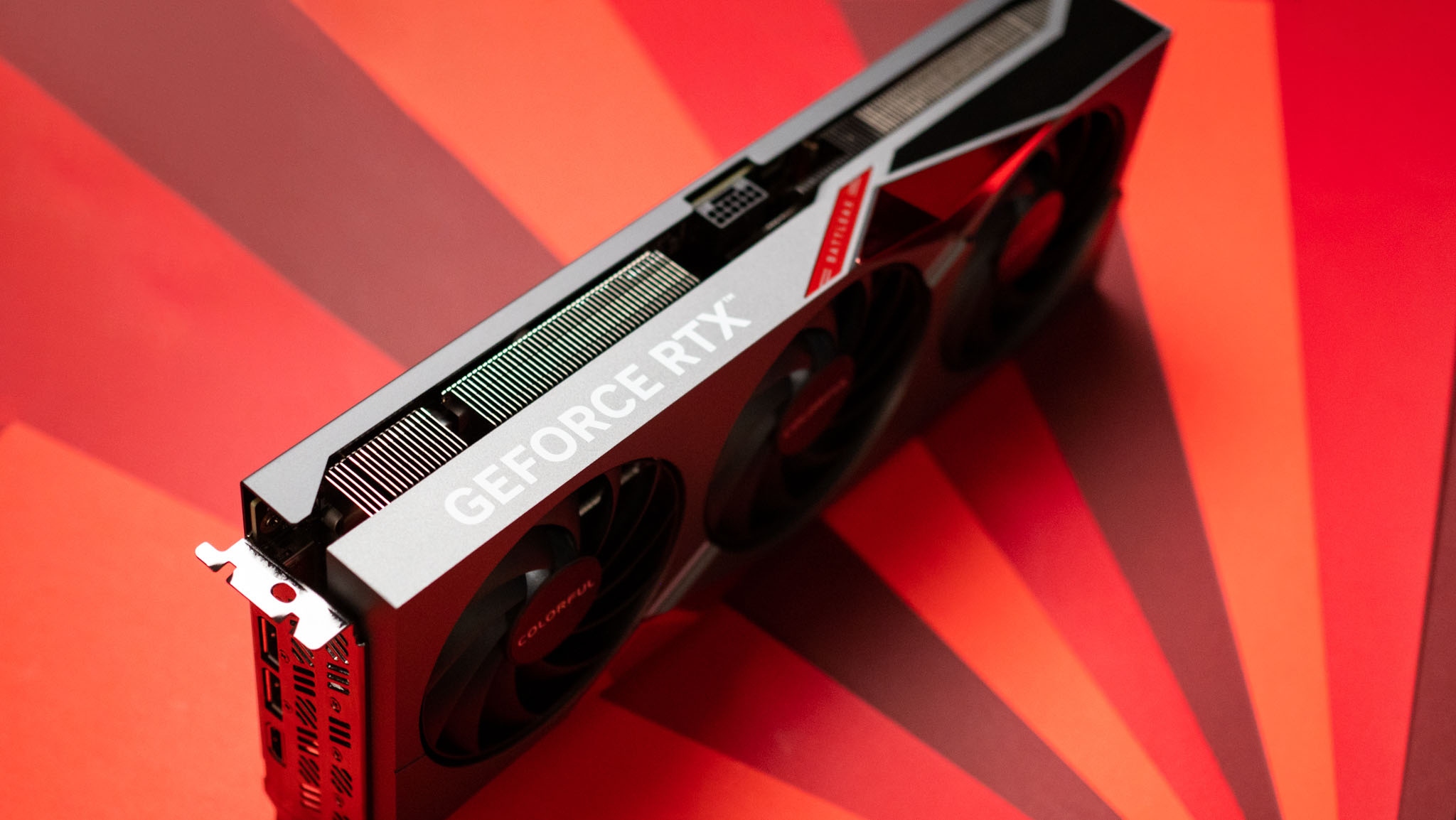
NVIDIA presented DLSS 4 alongside its RTX 5000 GPUs at CES 2025. Support spans RTX 20-series through 50-series cards, but feature availability depends on the generation:
- Enhanced Frame Generation supports RTX 40- and RTX 50-series GPUs.
- Older RTX cards receive improvements such as enhanced Ray Reconstruction, Super Resolution and Deep Learning Anti-Aliasing (DLAA).
- Multi Frame Generation is exclusive to RTX 5000 “Blackwell” GPUs.
The RTX 5000 architecture's specialized neural-rendering capabilities largely explain that last restriction. DLSS 4 relies more heavily on AI, and NVIDIA demonstrated Cyberpunk 2077 rising from about 30 FPS without DLSS to 235 FPS or more with DLSS 4. Multi Frame Generation is also expected to reduce reliance on VRAM, an increasingly pressing concern in 2025.
According to NVIDIA, Multi Frame Generation supports more than 75 games and apps that already implement standard frame generation, with additional support expected soon.
For NVIDIA RTX owners, including laptop users, DLSS should be the preferred upscaling option. Availability still depends on the game, so another technology may sometimes be necessary. NVIDIA's supported games and apps list covers hundreds of titles with RTX features.
NVIDIA's separate video-enhancement tools
NVIDIA Video Super Resolution (VSR) uses AI and GPU Tensor cores to upscale video in Edge, Chrome, Firefox and VLC Media Player. It does not use DLSS, though it similarly aims for a sharper, clearer picture.
RTX Video HDR converts streamed Standard Dynamic Range (SDR) video to High Dynamic Range (HDR). An HDR-capable monitor is required to view the result properly.
How AMD FidelityFX Super Resolution works
AMD FidelityFX Super Resolution, generally shortened to FSR, launched in 2021 as AMD's alternative to DLSS. Through FSR 3, it relied on advanced spatial-upscaling algorithms rather than AI and neural networks. AMD's GPUOpen explanation states that it does not require history buffers, motion vectors or per-game training.
Another important distinction, at least through FSR 3, is support across AMD, Intel and NVIDIA GPUs. AMD's supported-game list includes many titles, helping cover gaps left by competing technologies.
FSR 2 launched in 2023, improving upscaled image quality and adding improved ray tracing with Radeon RX 7900-series GPUs. FSR 3 followed toward the end of 2023 with limited game availability. At the time of writing, roughly 25 games supported FSR 3, compared with hundreds supporting FSR or FSR 2.
FSR 3's principal addition was Frame Generation alongside its algorithm-based Super Resolution. This substantially raises frame rates, especially at higher resolutions or with ray tracing enabled. Its new “Native AA” option can also smooth frames when a game's own antialiasing is insufficient.
- FSR 3 Frame Generation supports Radeon RX 5700 and newer GPUs, plus NVIDIA RTX 20-series and newer cards.
- FSR 3 Upscaling alone supports Radeon RX 590 and newer GPUs, or NVIDIA GTX 10-series and newer cards.
- FSR 1 and FSR 2 are available to developers through the Xbox Game Development Kit.
FSR 4 moves toward machine learning
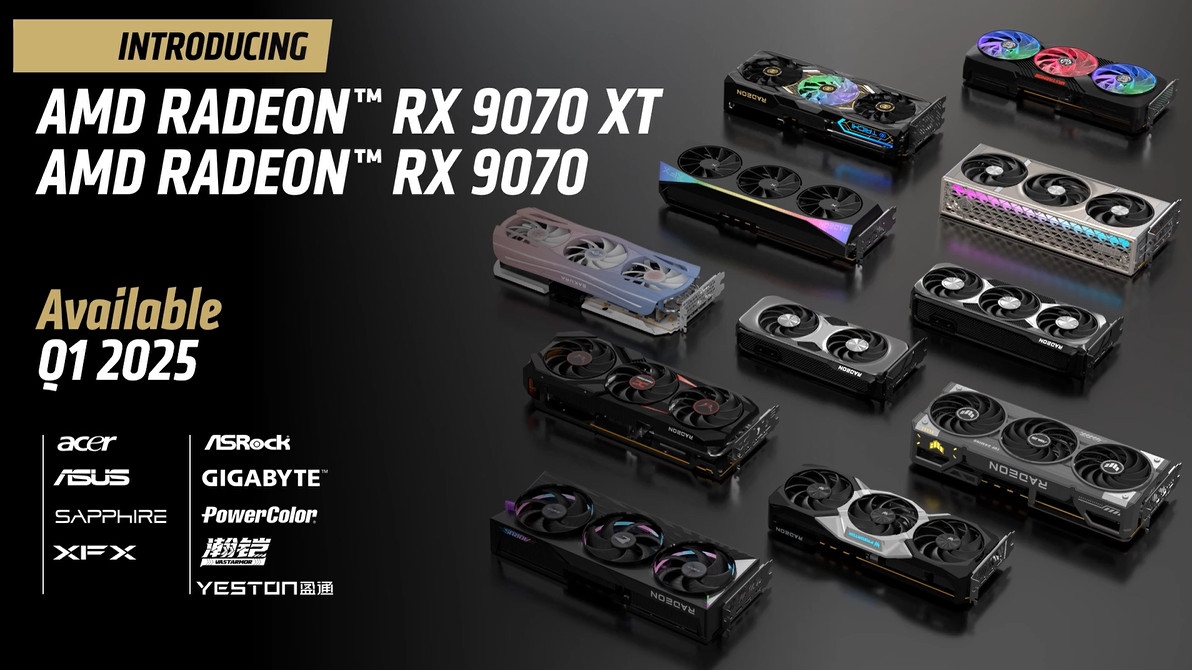
AMD's next-generation RDNA 4 GPUs mark a change for FSR. Its CES 2025 presentation was cut short before the anticipated fuller discussion of Radeon RX 9000 desktop GPUs, but it still offered some details.
RDNA 4 models, including the Radeon RX 9070 XT and RX 9070, feature third-generation ray tracing accelerators, a second-generation Radiance Display engine and second-generation AI accelerators. Architectural changes are also expected to bring significant improvements to IPC/frequency, AI compute architecture and compute units.
FSR 4 introduces machine learning developed specifically for AMD's next-generation GPUs. AMD claims “dramatic improvements in terms of performance and quality compared to prior generations.”
Official information remains limited to a few presentation slides. Post-CES leaks and rumors nevertheless prompted source author Cale Hunt to reconsider his planned RTX 5070 upgrade.
Hardware Unboxed's video offers an early look at potential FSR 4 results. Although its demonstration covers only one game, it shows noticeable, substantial differences between FSR 3.1 and FSR 4.
FSR 4 was initially expected to be limited to RDNA 4 GPUs, but interviews with AMD executives suggest that position may be changing.
How Intel XeSS works
Intel Xe Super Sampling (XeSS) supports Intel Arc GPUs and, through a different processing method, some AMD and NVIDIA hardware. Like DLSS, it uses AI model training to upscale images and improve performance. Intel lists 145 compatible games, covering some titles not served by NVIDIA's or AMD's alternatives.
Arc Alchemist and Battlemage GPUs include XMX cores for AI acceleration, comparable to NVIDIA's Tensor cores. These provide the preferred XeSS implementation. A separate path uses DP4a support on compatible cards, including AMD Radeon RX 6000 and RX 7000 GPUs and NVIDIA GTX 10-series through RTX 40-series GPUs.
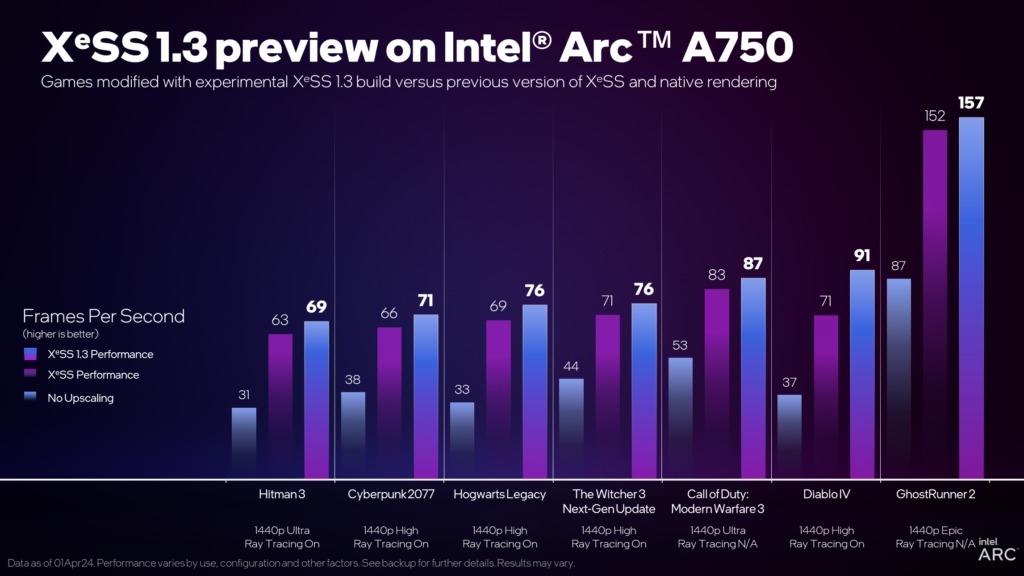
XeSS 1.3, unveiled in April 2024, improved frame rates while reducing aliasing and ghosting. Intel's benchmarks indicated average gains of 10% on the discrete Arc A750 and about 8% on the Core Ultra 7 155H processor's integrated Arc graphics across supported titles. Intel attributed most of those gains to updated AI models.
Intel announced XeSS 2 in December 2024 alongside its Battlemage B-series desktop GPUs, with support extending to older Alchemist cards. It combines Super Resolution with XeSS Frame Generation and Xe Low Latency (XeLL). XeLL is intended to eliminate the latency introduced by Frame Generation, with the combined technologies delivering a significant performance improvement, particularly on Battlemage.
What Microsoft DirectSR does
Microsoft announced DirectSR in February 2024 as a “missing link” for developers integrating Super Resolution. Rather than competing with DLSS, FSR or XeSS, it is an Application Programming Interface (API) that supports them through a single code path.
Developers can work with common inputs and outputs compatible with all three technologies instead of choosing separate vendor-specific optimizations. Microsoft described the aim as smoother, more efficient integration that scales across hardware.
DirectSR is available through the Agility SDK and supports Windows 10 and Windows 11.
Auto Super Resolution is a different technology
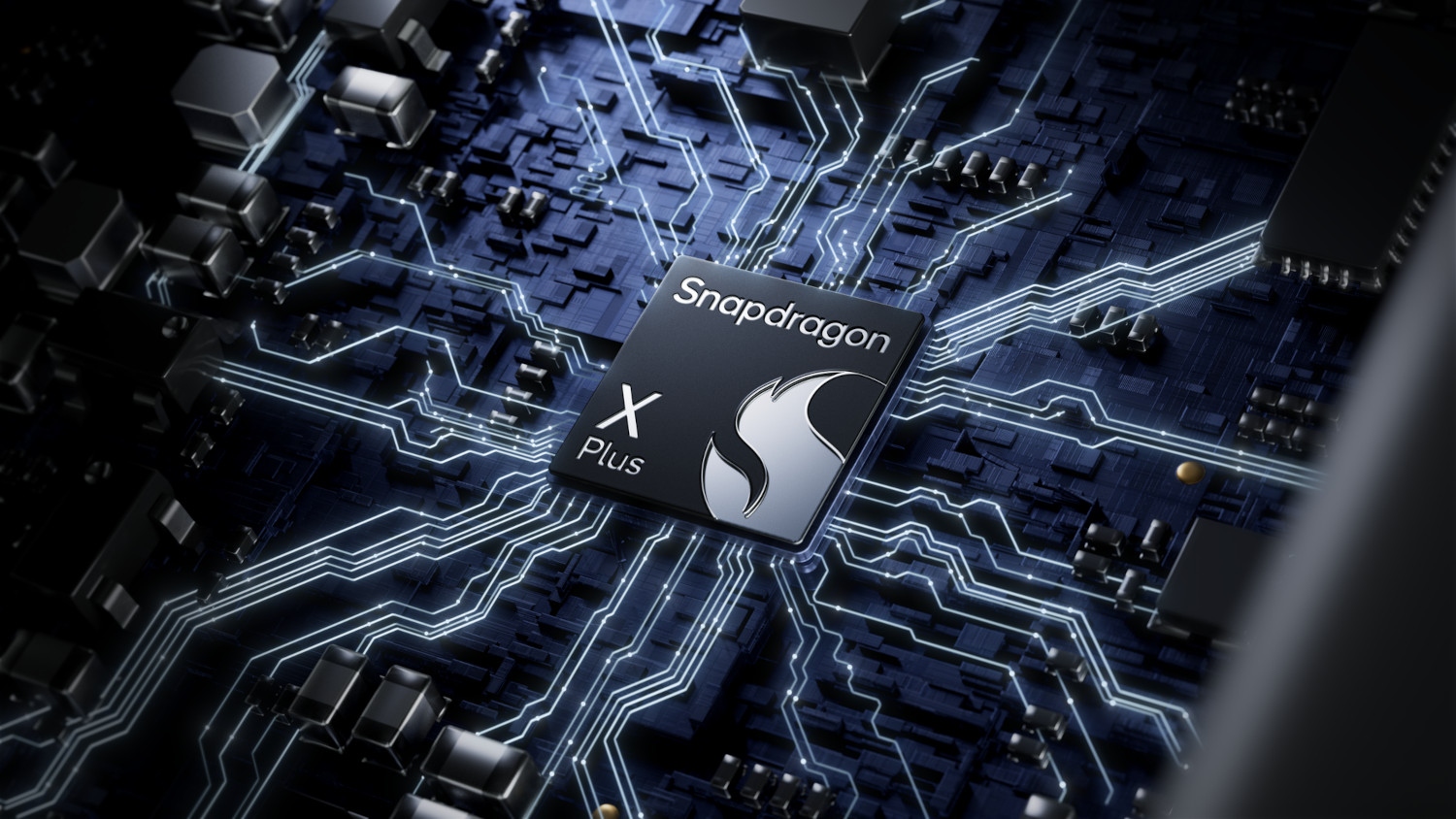
Auto Super Resolution (Auto SR) is separate from DirectSR. It is essentially Microsoft's own DLSS-like technology, expected to be built into Windows 11 version 24H2.
The AI-powered feature is coming exclusively to Copilot+ PCs using Qualcomm Snapdragon X chips with a Neural Processing Unit (NPU). It renders frames at a lower resolution, then uses AI to improve sharpness and clarity for the monitor's resolution.
At Build 2024, Microsoft demonstrated Baldur's Gate 3 on a Snapdragon X Elite platform and said it expected less demanding games to run at 30 FPS at 720p or 1080p.
Auto SR requires a Copilot+ PC with a powerful NPU, Windows 11 version 24H2 or later, updated drivers and a 1080p display resolution. The WorksonWoA compatibility list identifies supported titles.

About the source author: Cale Hunt has more than nine years of experience covering PC gaming, Windows laptops, accessories and related hardware for Windows Central.

